
Here's the thing about mismatched desire
One of you wants sex three times a week. The other wants it three times a month. This gap doesn't make either of you wrong. It makes most couples feel like they're failing at something fundamental. The person with higher desire feels rejected. The person with lower desire feels pressured. Both feel like they're disappointing someone they love. And nothing kills arousal faster than feeling obligated.
Lemon vibrators don't fix mismatched libido. But they change what the mismatch means.
Why the gap feels worse than it actually is
When desire is unequal, couples usually respond in one of two ways. Either the higher-desire partner stops asking entirely (which feels like rejection to them), or they keep asking, which triggers obligation and resentment in the lower-desire partner. Both paths lead to the same place: sex becomes something one person is doing for the other, not something two people are doing together.
What a clitoral vibrator like the Lemon does is fundamentally different. It separates pleasure from obligation. It lets the higher-desire partner experience their own satisfaction without needing their partner to match their frequency or arousal pattern. And it gives the lower-desire partner control over what they're comfortable with, which paradoxically, often increases their interest.
That last part is backed by decades of relationship research. When people feel they have choice, they feel less resentment. When they feel less resentment, they're often more open to intimacy. The gap doesn't disappear, but it stops being a problem you're fighting against and becomes something you're managing together.

Photo by cottonbro studio on Pexels
What actually changes when you introduce a lemon vibrator
Three specific shifts happen:
First, the higher-desire partner stops waiting. They can experience pleasure on their own timeline. This sounds like a small thing until you realize the alternative is months or years of suppressed desire, which breeds quiet resentment. A lemon vibrator takes that pressure off immediately. Their pleasure becomes their responsibility, not their partner's problem.
Second, the lower-desire partner stops feeling guilty. They're not saying "I don't want you." They're saying "I have a lower threshold for initiation." A toy makes that distinction clear. The lower-desire partner can even use the vibrator alongside their partner, which feels like collaborative pleasure instead of one person watching the other want something they don't. That shift from spectating to participating changes the emotional temperature of the whole interaction.
Third, sex becomes less transactional. When a higher-desire partner relies entirely on their partner for orgasm, every sexual encounter carries weight. There's a goal. There's performance pressure. With a clitoral vibrator in the mix, sometimes one partner uses it during partnered sex. Sometimes one partner uses it solo while the other is home or traveling. Sometimes they use it together. The point is, it stops being "Will we have sex today?" and becomes "What kind of pleasure time feels good right now?" That distinction matters more than it sounds.
The practical logistics that help
If you're considering bringing a lemon vibrator into a higher-desire, lower-desire dynamic, here's how to actually make it work:
Start with a conversation that isn't during sex or immediately before it. Low-desire partners are often avoidant of sex talk because it feels like negotiation. Make it clear that you're not trying to create an obligation. "I know we want different frequencies. I want you to feel zero pressure, and I want a way to take care of my own needs without resentment creeping in" is a totally different conversation than "I want more sex." One is a problem to solve together. The other is a demand.
Establish that using a vibrator solo is not a replacement for partnered intimacy, it's a complement to it. The higher-desire partner might use a lemon vibrator on nights the lower-desire partner isn't interested in sex. That's not them giving up on the relationship. That's them respecting their partner's boundaries while taking care of themselves. Make sure the lower-desire partner knows this isn't a reflection of anything they're doing wrong.
Let the lower-desire partner use the vibrator too. This is huge. Sometimes a lower-desire partner will use a lemon vibrator with their partner and realize their arousal builds faster when they're in control of the stimulation. A clitoral vibrator changes the sensation profile so much that what felt like "not enough" with manual stimulation suddenly becomes "more than enough." This can actually increase how often the lower-desire partner wants to engage. It's not guaranteed, but it happens.
Never introduce it as an accusation or a solution to a problem. "I got this because I need something" is radically different from "I got this because you're not enough." Tone is everything here. One invitation, one feels like blame.
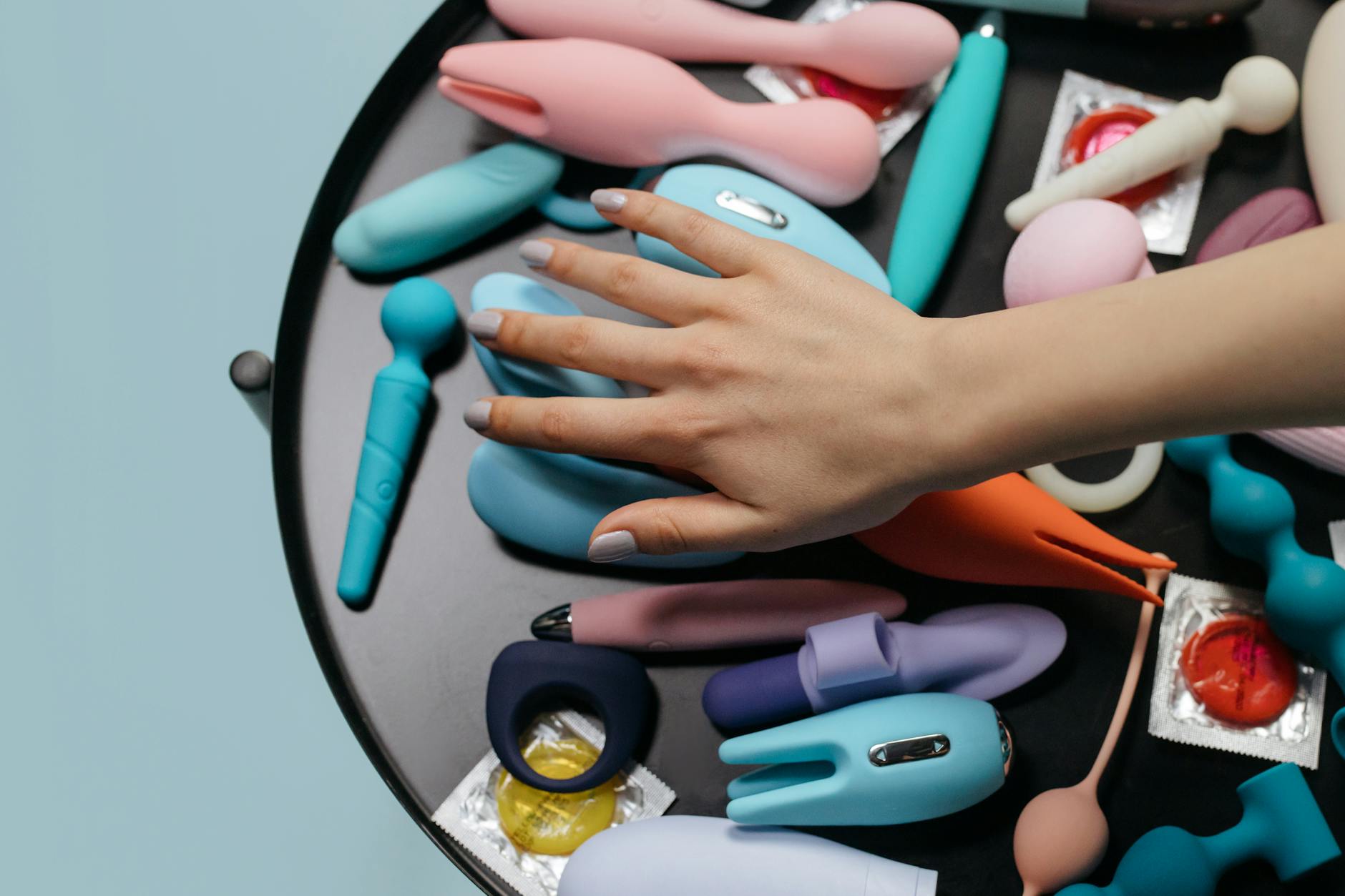
Photo by cottonbro studio on Pexels
When this actually heals the gap instead of hiding it
Here's what I see in my practice. When a couple uses a clitoral vibrator to bridge a libido gap, one of two things happens. Either the mismatch stays exactly the same but stops feeling like a failure (which is actually a win). Or something unexpected happens. The lower-desire partner, now holding a lemon vibrator in their hand with zero pressure attached, realizes they want to explore more. Or the higher-desire partner, now getting their needs met, stops carrying resentment, which makes them a warmer, more attentive partner, which makes the lower-desire partner more interested.
Neither of these outcomes is a guarantee. But both are common enough that they're worth betting on.
The key is understanding what you're actually doing. You're not using a vibrator to bypass the problem. You're using it to change the emotional stakes of the conversation. You're saying, "Your desire matters. My desire matters. We don't have to match to be okay."
How to choose which lemon vibrator makes sense
If you're both going to use it, the Lemon Clitoral Vibrator is the most intuitive choice. The suction sensation is different enough from manual stimulation that it can work for both people. If one partner wants something they can use solo and it's less obvious during travel, there are options. If one partner wants something small enough to use discretely, there are options for that too.
The point isn't which toy you pick. The point is that you're picking it together, with no shame attached. That conversation is the actual work. The vibrator is just what makes it easier.
FAQ
Can using a lemon vibrator actually increase a lower-desire partner's libido?
Sometimes. If the lower-desire partner's lower frequency comes from medication, hormonal changes, or fatigue, a vibrator won't fix that. But if it comes from the sensation not matching their body's responsiveness, or from performance pressure, or from not being sure what they actually want, a clitoral vibrator can genuinely shift things. A lot of low-desire partners have never actually experienced reliable pleasure, so they're not avoiding sex because they don't want it. They're avoiding it because the version on offer doesn't work for their body.
Is it normal to feel threatened if my partner wants to use a vibrator because we have different libidos?
Completely normal. That feeling usually means you're worried you're not enough. You're not worried about the vibrator. You're worried about what it means. So start there. Talk about what the vibrator would mean in your relationship before you buy it. For a lot of couples, once they realize it's not a replacement or a rejection, the threat feeling goes away.
Can we use a lemon vibrator together even if we have different libidos?
Absolutely. Some couples use a clitoral vibrator during partnered sex, with the higher-desire partner using it while the lower-desire partner is involved. Some couples use it in foreplay before the lower-desire partner decides if they want to continue. The point is flexibility. You're not locked into one way of using it.
What if my partner refuses to talk about this?
That's real. Some people grew up with messaging that vibrators mean the relationship has failed. Start smaller. Send an article. Ask "What's your gut feeling about couples using toys?" Let them know it's not an attack on them. If they still refuse, that might be a conversation worth having with a couples therapist. Avoidance around sexual communication usually shows up in other places too.
How do I bring this up without making my partner feel like I'm criticizing their libido?
Lead with your own need, not their deficit. "I want us to find a way that works for both of us" is different from "You don't want me enough." One is collaborative. One is accusation. Also, timing matters. Not right after a rejected initiation. Not during an argument. Pick a calm moment when you're both feeling connected.
Does using a vibrator with a low-desire partner mean I'm settling?
No. You're adapting. There's a difference. Settling means resigning yourself to unhappiness. Adapting means finding a creative solution that lets both of you get your needs met. A lemon vibrator isn't a consolation prize. It's a tool that changes the dynamic from one person sacrificing to two people compromising.
The real shift
Mismatched libido is one of the most common issues couples face, and it's one of the most charged. Because it touches something deep: the fear that we're not enough for the people we love, or that they're not enough for us. A clitoral vibrator doesn't solve the fear. But it does something almost as important. It makes the gap feel like something you're managing together instead of something you're fighting about. And in a relationship, that shift is everything.