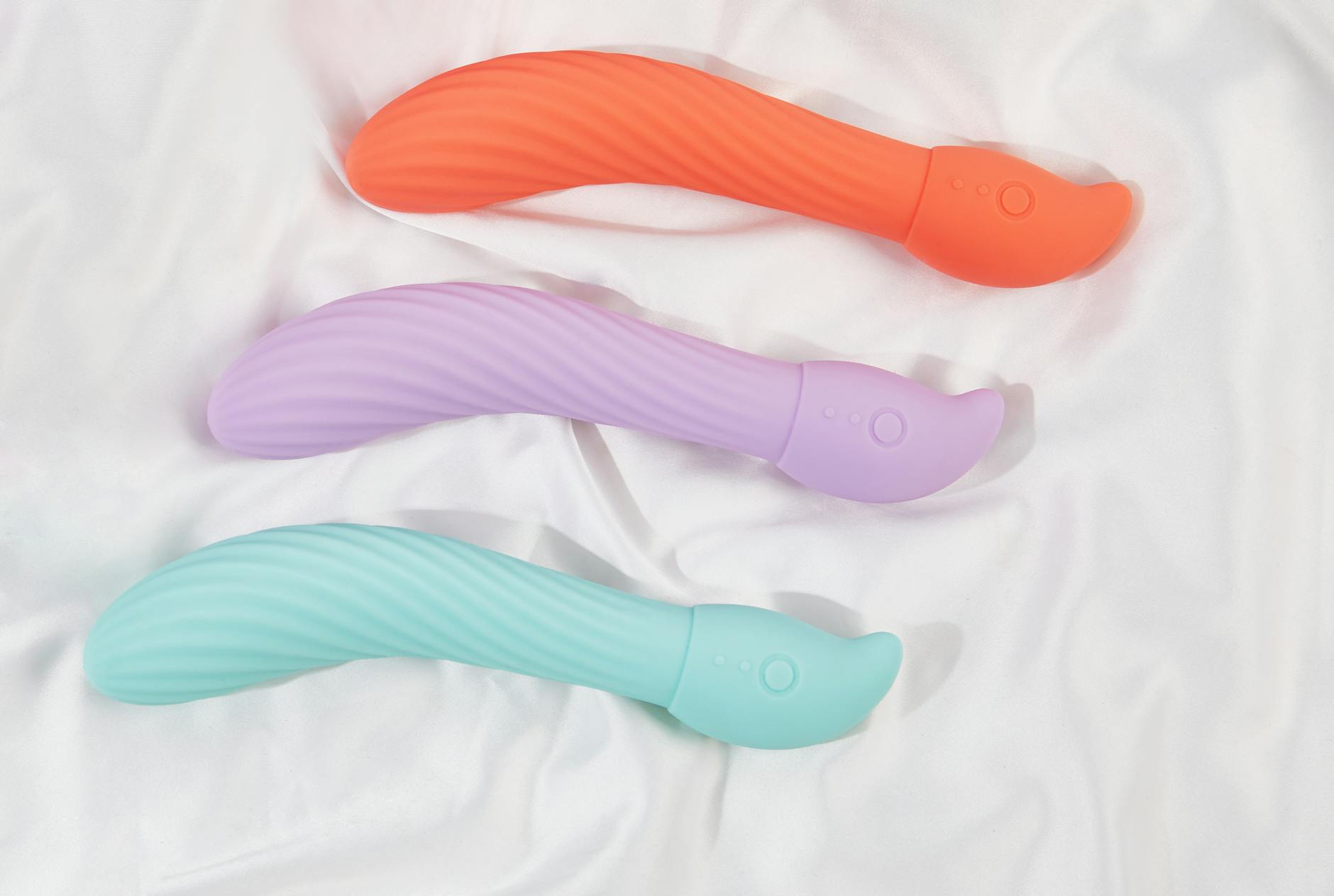
Here's what nobody tells you about toys in long-term relationships
After 10 years together, sex often stops being about novelty and starts being about connection. That's not a problem. But it does mean that when couples ask me about introducing a lemon clitoral vibrator, they're not usually chasing fireworks. They're looking for permission to evolve.
I've worked with hundreds of couples navigating this exact question, and the pattern is always the same: fear that a toy will somehow diminish what you've built together. Then, about three months in, couples report that it's actually deepened things. Not because the toy is magic. Because it forced a conversation that needed to happen anyway.
The real reason couples hesitate
Let's name what's actually happening when you feel nervous about introducing a lemon vibrator into a long-term partnership. It's not really about the toy. It's about three deeper anxieties stacked on top of each other.
First, there's the fear that you're "not enough" for your partner. If they need a toy, the logic goes, then somehow your body or your effort has become insufficient. This is understandable and almost universally unfounded. A lemon sexual toy is not a statement about your partner's satisfaction with you. It's a statement about what feels good to their specific body at this specific time in your life together.
Second, there's the vulnerability piece. Introducing anything new into a long-term sexual relationship requires showing up and saying "I want to try something different." After a decade, routines calcify. Suggesting change can feel like criticism, even when it isn't.
Third, there's the actual knowledge gap. Most people have never seen their partner have an orgasm with a lemon clitoral vibrator. They don't know what it looks like, sounds like, or how to respond.
What changes when couples introduce a lemon vibrator
Here's what I've seen happen repeatedly, and what research on long-term intimacy backs up.
The first shift is physiological. A lemon vibrator like the Lem works through gentle suction rather than traditional vibration, which means it creates a different kind of stimulation entirely. Your partner might experience orgasms that are more intense, differently located, or completely new in quality. You get to witness that. Your nervous system registers: "Oh, my partner's body is capable of more than I knew." That's not threatening to connection. It's often erotic in a way that's deeper than comparison.
The second shift is conversational. Introducing a toy forces you to talk explicitly about pleasure in a way you might not have done in years. What does your partner want? What feels good? What's worth five extra minutes? What makes them hesitate? These conversations, awkward as they feel at first, usually carry over into other parts of the relationship. Couples who can talk about pleasure tend to be couples who can talk about other needs too.
The third shift is psychological. For the partner using the toy, there's often a liberation that happens. Permission to enjoy something for its own sake, not in service to someone else's timeline or preference. Permission to take ten minutes that are purely about sensation and not about performance. That tends to show up in the relationship as less resentment, less obligation, more genuine enthusiasm.
How to actually introduce a lemon vibrator without it feeling weird
Timing matters. Don't introduce the conversation during sex or in the middle of a conflict. Pick a moment when you're both calm and the sexual context is totally removed. A walk, a coffee shop, a car ride. Somewhere that feels safe and ordinary.
Frame it around you, not them. "I've been curious about trying something new" lands differently than "I want you to be able to have better orgasms." The first is exploration. The second is criticism wrapped in a gift.
Be specific. "I read about lemon clitoral vibrators and I'm interested in trying one together" gives your partner actual information. Vague language like "spicing things up" makes everyone nervous.
Offer a test run without pressure. "We could get one and try it whenever, no expectations" removes the performance piece. If it doesn't work the first time, that's normal. Bodies change. What works at 35 might work differently at 45. A lemon vibrator is a tool, not a promise.
The money conversation nobody wants to have but should
Long-term couples often feel weird spending money on toys. There's a guilt piece. Why are we buying this? Are we failing at something? Should we be able to do this without it?
Here's what I tell people: you spend money on things that enhance your life all the time. A good mattress, workout equipment, nice cookware. Those tools don't mean you're failing at sleep or fitness or cooking. They mean you're taking those things seriously enough to invest in them. Same logic. If pleasure matters to your relationship, then tools that increase pleasure are a reasonable spend. Hello Nancy's prices are fair. You're not picking between intimacy and rent.
What happens at five years, ten years, fifteen years
I've tracked couples who introduced lemon vibrators or other adult toys and followed them for years. The pattern is consistent across the board.
Years one through two: novelty phase. The toy is exciting, it's new, you're probably using it relatively frequently. This is fine. Enjoy it.
Years three through five: integration phase. The toy becomes part of the repertoire, used sometimes, not used other times. You've stopped treating it as a fix and started treating it as an option. This is actually when the relationship benefit tends to be most visible. Pleasure is reliable. Resentment drops.
Year five onward: the toy becomes invisible. You use it or don't based on what feels good. It's no longer a symbol of anything. It's just a thing that makes sex better. The conversation you had when introducing it has likely moved into the background, replaced by the ordinary fact of using it together sometimes.
That normalization is the actual win. Not because the toy is magic, but because you've successfully expanded your repertoire without it becoming weird. You've signaled to your partner that pleasure matters and that you're willing to change and try things. That carries over into everything else.
What long-term couples actually wish they'd known earlier
I ask this in almost every session. "If you could tell couples who are earlier in their relationship something about sex and toys and long-term intimacy, what would it be?"
They say things like: "Start the conversation earlier. Don't wait until sex has become obligatory." "Your partner's pleasure is not your job. It's your shared interest." "The toy is not the point. The willingness to explore is."
One couple said something I think about often: "We thought we were introducing a toy. What we actually did was give ourselves permission to want something. That changed everything."
Lemon clitoral vibrators work particularly well in long-term relationships because they're not trying to replicate anything your partner can do. The Lem's suction mechanism is fundamentally different from hands or bodies. That difference is part of what makes it work. You're not competing. You're expanding.
FAQ: What couples actually ask
Does using a toy together mean my partner isn't attracted to me anymore?
No. Attraction and pleasure are different things. Your partner can be wildly attracted to you and still benefit from a different kind of stimulation. After 10+ years together, bodies change. What worked at 25 might feel different at 35 or 45. A lemon vibrator adapts to that. Your partner doesn't stop wanting you. They want you plus something that feels good to their current body.
How often should we be using a lemon vibrator if we're trying to keep things fresh?
There's no "should" here. Couples I work with use toys once a week, once a month, or spontaneously based on mood. The frequency doesn't matter. What matters is that it's consensual and that you're both enjoying it. If one person is using it to compensate for a lack of desire from the other, that's a different conversation and worth bringing to a therapist.
Will using a lemon vibrator make regular sex feel boring by comparison?
Sometimes the opposite happens. When couples introduce a lemon clitoral vibrator, they often report that they're more excited about sex generally because there's less pressure on any single encounter to be "perfect." If this encounter is just regular sex, that's fine. You'll use the vibrator next time. If you're always trying to recreate toy-level stimulation without a toy, that's when things get frustrating.
What if my partner wants to use it and I feel left out?
That's a real concern and worth talking about explicitly. Some couples use a lemon vibrator on one partner while the other partner is actively involved, touching, kissing, paying attention. Some partners take turns. Some use it together on one person and then switch. The frame that "helps is when you think of the toy as something you're doing together, not something one person is doing to themselves separately."
Is it normal for it to feel awkward the first time?
Completely. You're trying something new with someone you've been intimate with for years. That vulnerability doesn't disappear just because you know each other well. Awkwardness is normal. Laughter helps. Communication helps more. "This feels weird but good" is a totally acceptable thing to say mid-experience.
How do I know if my partner actually wants to use a lemon vibrator or if they're just doing it for me?
You ask. Directly. "Are you actually into this or are you humoring me?" Couples who can ask that question are couples who can ask harder questions. And the answer tells you something important. If your partner is genuinely not interested, that's fine. You don't need a toy to have great sex. If they're curious but nervous, that's different. Nervous people usually warm up once they try something. People who are truly uninterested don't usually change.
The actual point
Long-term relationships work because you keep choosing to show up and learn about each other. A lemon vibrator isn't the point. It's just a really clear vehicle for that choice. You're saying, "I want to know what feels good to your body now." You're saying, "I'm willing to try something new with you." You're saying, "Your pleasure matters enough to be awkward about."
That's the stuff that sustains intimacy over decades. The toy is just the excuse to have the conversation.
If you and your partner are thinking about introducing a lemon clitoral vibrator or any new tool into your relationship, start with the conversation. That's the whole game. Once you can talk about what you want, the actual mechanics of the toy are easy. If you're stuck on the conversation part, or if introducing toys has surfaced deeper tensions, that's when working with a therapist can really help. Couples who can navigate change together tend to stay connected. Everything else is just details.
Want to explore this with your partner and need some guidance? I'm here to help. Let's talk.