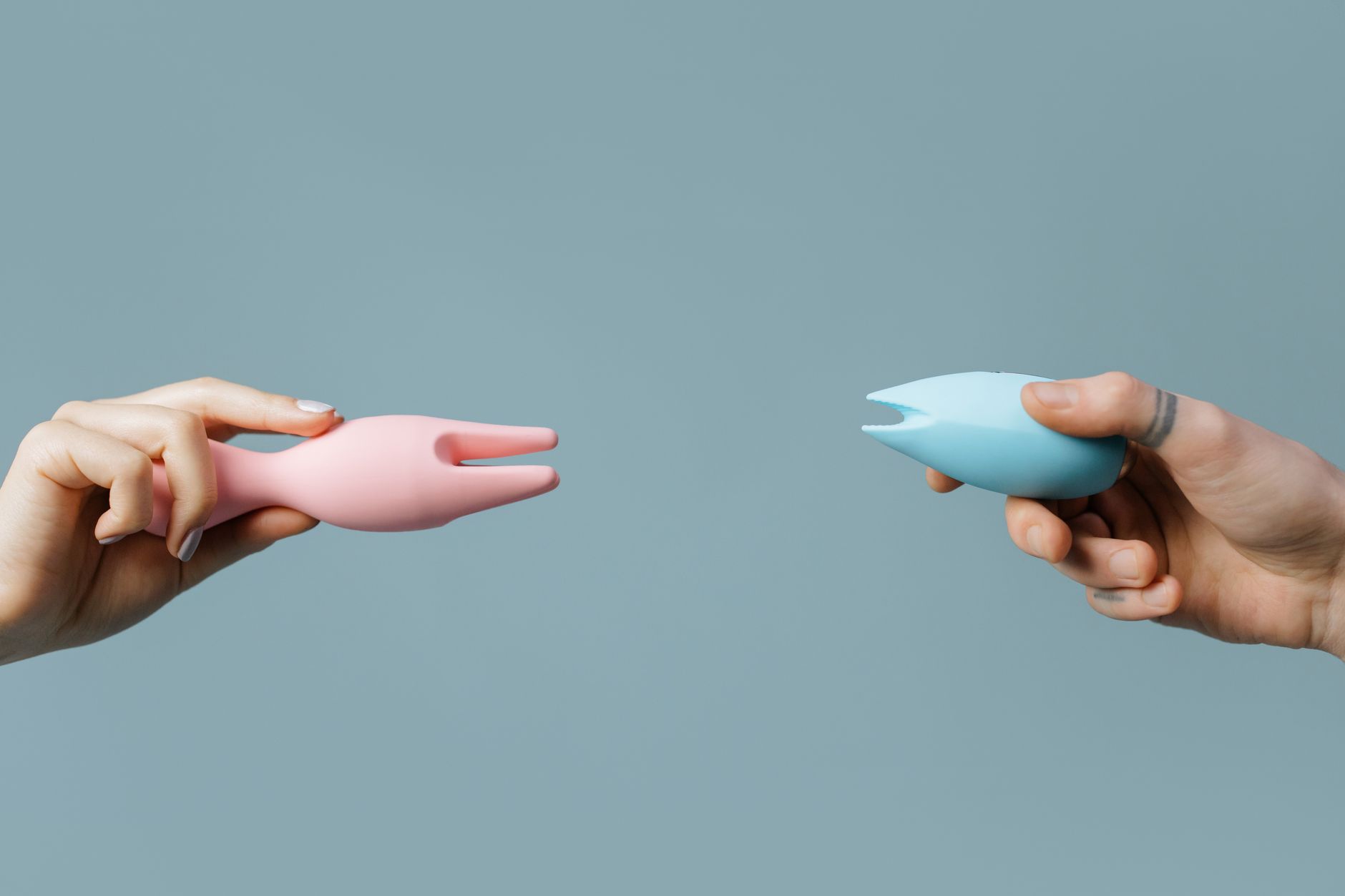
Let's talk about antidepressants and pleasure
Starting an antidepressant is the right call for most people. And it's also true that some antidepressants flatten arousal, delay orgasm, or make sensation feel distant. Both things are real. Both things matter. The tricky part is that nobody talks about the timeline, so you end up either white-knuckling through sexual numbness or wondering if you've permanently broken something you haven't.
Here's what actually happens physiologically when you introduce an SSRI or SNRI into your system, and what that means for exploring pleasure with lemon vibrators or any other way.
How antidepressants affect arousal (the timeline)
Most SSRIs and SNRIs take 2-4 weeks to stabilize in your system. During that window, your neurochemistry is shifting. Serotonin and norepinephrine levels are rising in places they've been depleted. Your brain is reorganizing.
During weeks 1-3, you might notice:
- Emotional numbness that sometimes extends to physical sensation
- Fatigue (which kills desire before it starts)
- Disconnection from your body, even in non-sexual moments
- Sometimes paradoxically increased anxiety
This is not permanent. This is not a sign you picked the wrong medication. This is your nervous system adjusting.
By weeks 4-6, most people report:
- Steadier mood, which gives you mental space for desire again
- Energy returning
- Sensation becoming sharper, not duller
- Anxiety dropping low enough that pleasure can exist
There's usually a sweetspot between week 3 and week 6 where emotional stability returns but sexual side effects haven't fully settled in. Some people experience them briefly then they fade. Some people experience them longer.
The antidepressant that affects arousal most (and the ones that don't)
Paroxetine and fluoxetine are notorious for sexual side effects. They hit about 40-60% of users. Sertraline affects about 20-30%. Escitalopram and citalopram are gentler on arousal.
SNRIs like venlafaxine and duloxetine tend to be less disruptive to desire and sensation than SSRIs, though the data is mixed depending on dosage and individual neurology.
If you started paroxetine and hit a wall at week 4, that's not because you're broken. That's pharmacology. Talking to your doctor about switching classes is completely reasonable.
What's not reasonable: stopping the medication because you miss your orgasms. Depression doesn't fix your sex life. It worsens it. The goal is always to find a medication that stabilizes your mood AND preserves your capacity for pleasure.
When it's actually safe to explore pleasure
Here's the honest answer: immediately, if you want to.
There's no waiting period where your body is fragile or the medication will interact badly with vibration. A lemon vibrator won't interfere with your SSRI. Your body isn't off limits.
But there's a difference between "safe" and "likely to feel good." Most people find that exploration feels pointless or frustrating during weeks 1-3 because sensation is muffled. By week 4, you're usually in a better headspace to notice nuance instead of chasing sensation you can't quite reach.
If you're already exploring with lemon clitoral vibrators or other toys, keep going. Consistency actually matters here. Regular engagement with your own pleasure sends signals to your brain that pleasure is something your body is supposed to do. That signal work is valuable especially when everything feels flat.
If you're not exploring yet, week 3-4 is usually the sweet spot to start experimenting. Your mood is stabilizing, your energy is returning, and you've got some cushion before the side effects peak.
Why sensation feels different (and what helps)
Antidepressants don't numb you evenly. You might notice that your clitoris feels less sensitive but your inner thighs feel more sensitive. Or that orgasm is harder to reach but feels more intense when it arrives. Or that it takes longer to warm up but the sensation is sharper once you do.
This is your serotonin system recalibrating. It's not broken. It's different.
Three adjustments that help during this period:
Start lower, go slower. If you typically use a lemon vibrator on a higher pattern, dial it back to patterns 1-2 and stay there longer. Your nervous system needs more time to register sensation. Blasting intensity on a numb system just frustrates you.
Warm up matters more now. Add 10-15 minutes of foreplay (or solo exploration, or both) before introducing toys. Your arousal system takes longer to rev up on antidepressants. That's not a defect. That's just how the timeline works. Budget for it.
Pay attention to mental noise. Antidepressants quiet intrusive thoughts, which is great for your mood and often great for pleasure. But early on, you might find your brain is over-analyzing the sensation instead of experiencing it. That usually settles by week 6. It's not something you can force. But noticing it happens helps you not panic when your mind keeps drifting.
The side effect that's worth talking to your doctor about
Some people experience delayed orgasm or anorgasmia (difficulty reaching orgasm at all) that lasts beyond week 6. This happens in maybe 20-40% of people on SSRIs, depending on the drug and dose.
If this is you at week 8, that's the moment to loop in your prescriber. Options include:
- Dose adjustment (sometimes lower is better for sexual function)
- Adding bupropion, which actually enhances sexual response
- Switching to a different class of antidepressant
- Taking a "drug holiday" 24-48 hours before you plan to have sex (only for some SSRIs; talk to your doctor about whether this is safe for your specific prescription)
These are all normal conversations with a good prescriber. If your doctor responds with "just live with it," that's a sign you might benefit from a second opinion. Sexual function is health. It matters.
What doesn't help: pushing harder with a lemon vibrator or trying increasingly intense stimulation to force an orgasm that isn't coming. That usually creates frustration and resentment toward the toy and toward sex generally. Better to pause, adjust the medication, and try again.
Partner sex during the adjustment window
If you're in a relationship, this conversation is worth having early. Tell your partner: "My medication is recalibrating my nervous system. For the next few weeks, arousal might feel slower or muffled. This is temporary. And I'm still interested in exploring together."
That honesty prevents your partner from personalizing a neurochemical shift. They won't think you've lost interest. You won't feel pressured to perform sensation you're not experiencing yet.
You might also discover that some forms of sex feel better than others during this window. Penetration might feel more distant while oral feels sharper. Or vice versa. Clitoral stimulation with a lemon clitoral vibrator might feel more accessible than partnered sex. All of this is data. All of it changes as your medication stabilizes.
The goal isn't to white-knuckle through to climax. It's to stay connected to your own body and your partner's body while your brain chemistry is rearranging itself. That sometimes means slowing down. That sometimes means using a toy. Both are good.
The longer timeline
By week 8-12, most people report that sexual side effects have either resolved or stabilized at a manageable level. Your mood is steady. Your desire is clearer. Your sensation is sharper than it was at week 2.
This is often better than baseline. Not because the medication is magic. But because depression kills desire before the medication does. You've got your mental space back, and that usually translates to richer, more present sexuality than you had while you were depressed.
Some people do experience persistent sexual side effects that don't fully resolve. If that's you, you have options. None of them involve abandoning the medication that's keeping you stable. All of them involve working with a prescriber to find a better fit.
Your pleasure matters. Your mental health matters more. And usually, you don't have to choose between them.
FAQ
Can I use lemon vibrators while on antidepressants?
Yes. There's no pharmacological interaction between a lemon vibrator and any antidepressant. Vibration won't affect how your medication works, and your medication won't damage the toy. The only question is whether sensation will feel accessible, and that usually improves by week 4-6.
Will antidepressants permanently change my orgasm?
No. For most people, sexual side effects either fade as your body adjusts or resolve when you switch medications. Some people do experience lasting changes to arousal or orgasm (like taking longer to reach climax), but this is the exception, not the rule. And even when it does last, it's usually manageable with adjustments to routine or medication tweaks.
Should I tell my partner I'm taking an antidepressant before we have sex?
That depends on your relationship and your comfort. There's no medical reason to disclose. But there are relational reasons. If you're experiencing sexual side effects and you don't explain why, your partner might think you're unattracted to them. Honesty prevents that misunderstanding. What you say and when you say it is totally your call.
What if my antidepressant tanked my desire and it hasn't come back after three months?
Talk to your doctor. Three months is beyond the typical adjustment window. You likely have a medication mismatch. Options include lowering your dose, switching to a different class (bupropion or buspirone added to an SSRI, for example), or finding a different SSRI altogether. This is fixable.
Can I use a vibrator to help with antidepressant-related anorgasmia?
Sometimes yes, sometimes no. If your issue is slow arousal or muted sensation, lemon clitoral vibrators can help by offering more direct, consistent stimulation than your body might self-generate. But if your issue is that orgasm is neurologically blocked (true anorgasmia), no amount of vibration will force it. You'd need to address the medication. Adding a vibrator might help during the process of finding better medication, though.
How long before the sexual side effects kick in?
Usually 2-4 weeks in, when the medication reaches steady state in your system. But some people notice them immediately, and some people don't experience them at all. It depends on the drug, the dose, and your individual neurology. If you hit week 4 and feel fine, that doesn't mean the side effects are coming later. You might just be one of the people they don't affect.
Is it normal to feel less aroused even when my mood is better?
Completely normal. Depression and antidepressants affect arousal through different pathways. You can feel stable and emotionally better while still experiencing sexual flatness. That usually resolves by week 8, but not always immediately at week 4. If it's still flat at week 10, it's worth a prescriber conversation.
The real timeline
Starting an antidepressant is a marathon, not a sprint. Your sexual function is part of that marathon. You're not broken if sensation feels muffled for a few weeks. You're not broken if it takes until week 8 to feel normal. And you're not stuck if it takes longer than that.
Your pleasure matters. So does your mental health. And in most cases, good medication helps you protect both. Give it time. Pay attention to what your body tells you. And know that week 2 numbness almost never becomes your permanent reality.