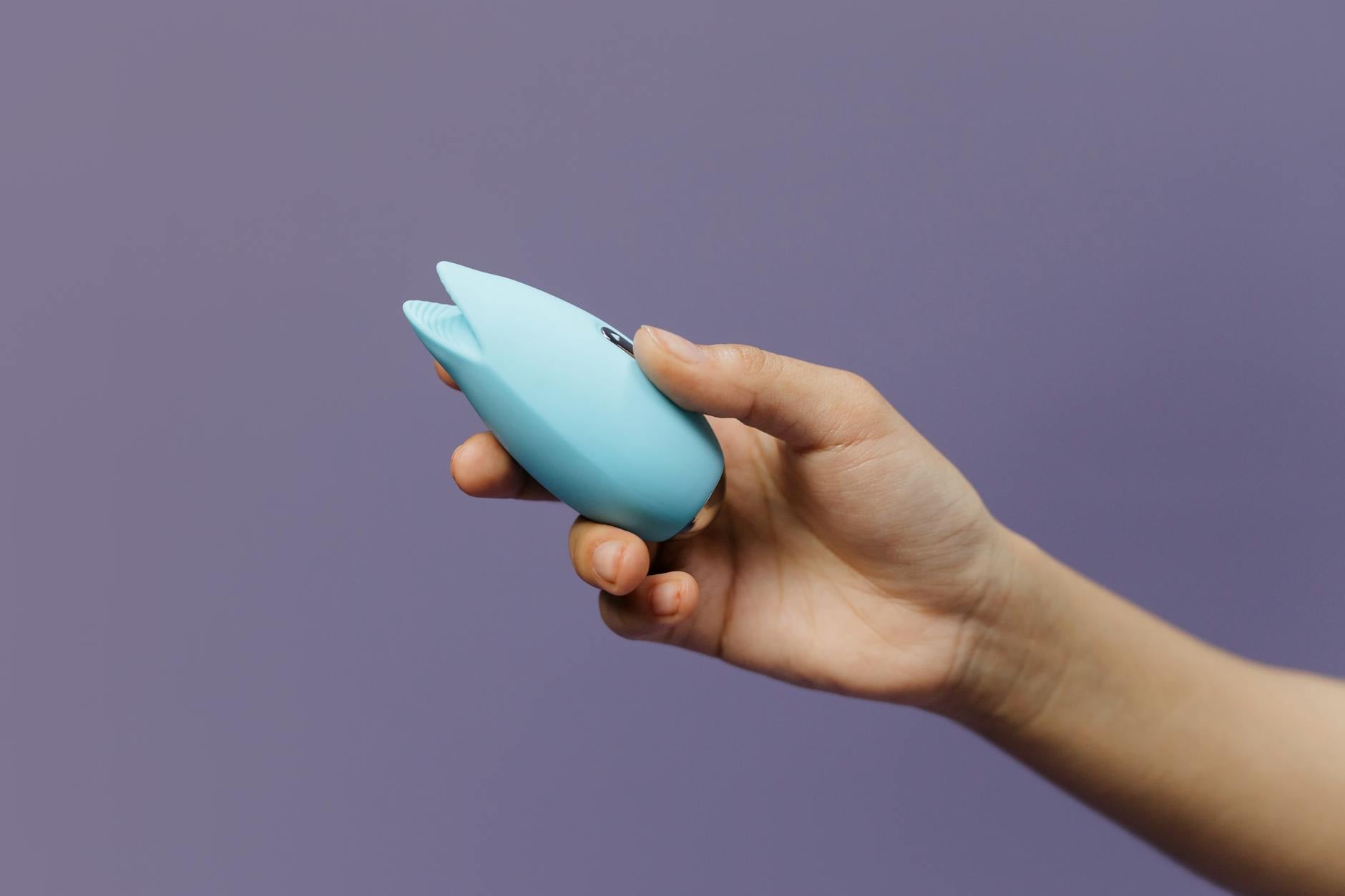
Here's what nobody tells you about toys and partners
Using a Lemon Vibrator during partnered sex isn't awkward if you frame it right. The secret isn't making it feel less clinical or wrapping it in seduction. It's actually the opposite. The couples I work with who use clitoral toys most successfully treat them like any other body part they're working with. Your hand was useful. Your mouth was useful. A lemon vibrator is useful too.
The resistance you're feeling might not be about the toy at all. It's usually about who gets to guide the experience and how pleasure is distributed in the moment.
Why external stimulation changes the dynamic
When you add a toy to partnered sex, the body-to-body contact often decreases. That's not inherently bad, but it's different. Your partner might interpret it as rejection, as if their touch wasn't enough. Or they might feel sidelined, watching instead of participating.
Here's the reality: many people with vulvas need external clitoral stimulation to orgasm reliably, and partnered penetration alone doesn't provide that. A Lemon Vibrator bridges that gap without replacing your partner. But they have to understand that. Without that conversation, you're just introducing a tool while the actual problem stays underground.
The physiology is straightforward. Clitoral nerve density is highest on the external surface, and suction-based stimulation like the Lem feels different from manual pressure. It often feels more direct without being more intense. That's why many people find external toys helpful even when their partner's hands work beautifully.
The conversation before you bring it out
Don't wait until you're already in bed. That's reactive, not intentional.
Sit down when you're both clothed and not about to have sex. Say something like: "I want to talk about something that might improve my pleasure during sex, and I want your input." That opener signals collaboration, not criticism.
Then name what you want specifically: "I've been reading about external stimulation, and I think a clitoral vibrator might help me orgasm more reliably. I'd like to try it with you. How do you feel about that?"
Wait for their response. Don't fill the silence. They might feel insecure. They might be curious. They might ask questions. All of that is okay and important information.
If they respond with hesitation, the problem isn't the toy. The problem is usually: "I feel like I should be enough" or "I'm worried it means you're not satisfied with me." Those are about them, but they're real. Address them directly. "Your hands and body matter to me. This isn't about replacing you. It's about what I need to feel good." That's different from "You're being insecure."
Positioning that works for both of you
The worst part of introducing a toy is fumbling with angles and losing momentum. You can solve this before you start.
If you're in a position where you can reach your own clitoris comfortably, you control the toy. This is the easiest entry point. You know the pressure, the angle, the speed that works. Your partner is still there, penetrating if you want penetration, holding you, or doing something else entirely. They're not managing a new tool while also managing their own arousal.
Alternatively, if your partner is comfortable and you trust their rhythm, they can hold the lemon vibrator and direct it while you're in a position where you can guide their hand. This requires communication during sex, which feels awkward at first and becomes normal quickly. "Higher, right there, slower" is not mood-breaking. It's mutual.
Avoid starting with positions where the toy is hard to access or where either of you has to contort. First-time toy integration is not the time to experiment with acrobatics. Missionary, spooning, or you on top all work well because you have clear control or your partner has clear access.
What to do with your hands and body
The moment you introduce a Lemon Vibrator, people get weirdly stiff. Your hands disappear. Your body goes static. You're waiting for the toy to do everything.
Don't do that.
Your hands are still working. If you're not using the toy, you're touching your partner. If you're using the toy, your other hand is on them. Your body is still moving, still responding, still engaged. The vibrator is an addition, not a replacement for your participation.
If your partner is holding the toy, your hands are on them. You're kissing, you're moving, you're making noise. You're showing them that you're aroused and connected, not just receiving stimulation.
This sounds obvious, but it's the thing people miss most. Stay present in your body. The toy handles external clitoral work. Everything else is still yours to contribute.
Speed, pressure, and the goldilocks moment
Most clitoral vibrators, including the Lem, have adjustable intensity. Start low. This is not the moment to go maximum intensity, even if that's what solo you gravitates toward.
Why. Arousal feels different with another person. Your baseline sensitivity changes. Your nervous system is processing more information. The intensity that feels perfect when you're alone might feel overwhelming with a partner present.
Begin around pattern 1 or 2 if your Lemon Vibrator has settings. Let sensation build. You can always increase. You can't unscare your partner or unstarch your nervous system once you've jolted yourself into overstimulation.
Pressure matters too. The magic of suction-based stimulation is that you can use less pressure than you would with a vibrating wand. Let the suction do the work. You don't need to press hard.
When things don't feel right, pause
If you feel disconnected, if the positioning isn't working, if you realize your partner is uncomfortable, stop. Not forever. Just for that session.
The reason couples abandon toys isn't usually because the tool is wrong. It's because the first attempt felt awkward and they decided it wasn't worth it. But awkward is just the learning curve. You're introducing a new element into an established rhythm. Of course it feels weird at first.
Take feedback seriously though. If your partner says they feel left out, don't dismiss that. It's real to them. But it's also fixable. Maybe they need to be more hands-on. Maybe they need to be inside you while you use the toy. Maybe the setup just needs tweaking.
When you pause, don't make it a big conversation. "This position isn't working. Let's try something different next time" is enough. You're solving a practical problem, not diagnosing a relationship crisis.
The orgasm conversation
Here's something that surprises people: using a clitoral vibrator with a partner doesn't automatically change how orgasm feels or when it happens.
Some people find they orgasm faster with the added stimulation. Others find it takes longer because the dynamic is different or their nervous system needs time to settle into pleasure with someone else present. Neither outcome is better or worse.
Talk about your expectation beforehand. Not a script, just reality. "This might help me orgasm, but it also might just feel good without leading to orgasm, and that's okay too." Taking pressure off the outcome actually makes it more likely.
If you're using the toy but still not orgasming, don't assume it's broken. Your body might need more time, more relaxation, or different mental focus. Orgasm with another person present is neurologically different from solo orgasm. That's not a problem to fix. That's just your nervous system being honest.
When your partner wants to be the one controlling the toy
This is beautiful territory, but it requires trust and communication.
If your partner wants to hold the Lemon Vibrator and direct it, that's wonderful. But you need to be able to guide them without it feeling controlling. That means clear, specific direction. "Slower," "To the right," "Right there," instead of "You're doing it wrong."
And your partner needs permission to ask if something feels good. "Is this working for you?" isn't unsexy. It's actually one of the hottest things a partner can ask, because it means they're paying attention and they care.
If their rhythm doesn't match what would feel good solo, don't assume they're bad at it. They're learning your body with a tool they've never used before. Your job is to teach them, not to judge them.
FAQ
How do I know if my partner will feel insecure about a vibrator?
You don't know until you ask. But many partners feel less insecure when they understand that a clitoral vibrator targets a specific part of the body that's hard for penetration or hands alone to stimulate consistently. Frame it as body knowledge, not inadequacy.
Can I use a Lemon Vibrator during penetration?
Yes, absolutely. If you're being penetrated and want clitoral stimulation, you can hold the Lem against your clitoris while your partner moves inside you. This is one of the most reliable ways to orgasm during partnered sex if that's something you want.
What if my partner ejaculates too quickly and then loses interest in using the toy with me?
That's a conversation about pleasure equity and what sex means to both of you. Some partners need time to recover. Others can stay present and engaged without being aroused. If they're losing interest entirely, that's worth discussing when you're not in bed. "I need us to spend time on my pleasure too. How can we make that work?"
Should I orgasm with or without the toy first so my partner knows what it looks like?
That's one approach, but it's not necessary. Some people find it helpful. Others find it puts too much pressure on performing an orgasm. Do what feels genuine to you.
Is using a vibrator with a partner different from using one solo?
Yes. Your nervous system is activated differently. Arousal might build slower or faster. You might need more time or less. All of that is normal and doesn't mean anything is wrong. You're just in a different context.
What if we try it once and neither of us likes it?
Then you try something else or you don't use it. One awkward attempt doesn't mean the Lemon Vibrator is wrong for you. It means that particular moment wasn't right, or the setup needs adjusting, or you both decided toys aren't your thing. All of those are valid conclusions based on real experience.
The bottom line
Using a clitoral vibrator with a partner is a skill, not a talent. You get better at it through communication, trial, and adjustment. The couples I work with who are most successful with toys are the ones who treat them like equipment, not secrets or solutions. You're both working toward mutual pleasure. The tool is just the next chapter in that conversation.
If you're ready to explore but unsure where to start, the Lemon Clitoral Vibrator is designed for precisely this kind of partnership because it gives you complete control of your own experience, even when someone else is in the room.