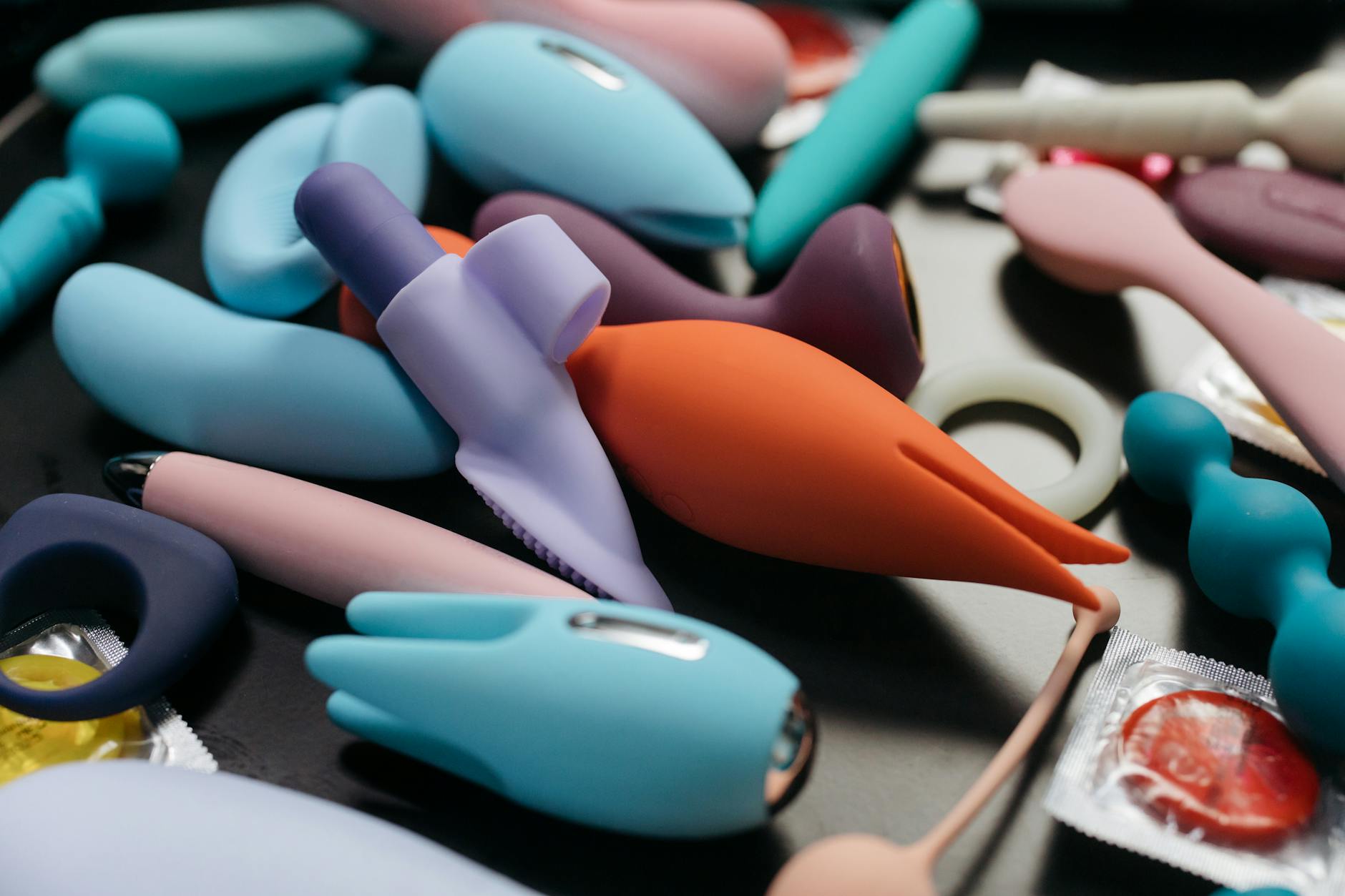
Let's talk about cervical sensation without the mystery
If you have a cervix that lights up when something touches it just right, you're not alone. And you're definitely not broken. What you're experiencing is responsive cervical tissue, and it's a completely normal variation in how bodies experience pleasure. The thing is, most toys and most information out there is designed for clitoral pleasure, leaving cervically-responsive people to figure things out alone.
That's where lemon vibrators change the game. Unlike deeper insertive toys, lemon vibrators use gentle suction and targeted vibration that you can control with precision. If you have a responsive cervix, this matters because you need stimulation you can dial in, pause when things get intense, and adjust without fumbling around.
What responsive cervix actually means
Your cervix is the lower part of your uterus that sits at the back of your vaginal canal. It has nerve endings, and for some people, those nerve endings are wired to feel pleasure. For others, touch there feels like nothing. And for a smaller group, it can feel uncomfortable or even painful. None of these is wrong. They're just different.
If you're in the "pleasure" camp, cervical sensation tends to arrive as a deeper, slower-building feeling compared to clitoral pleasure. It's less about intensity and more about pressure and sustained stimulation. Some people describe it as a fullness or a spreading warmth. Others say it feels like a different kind of orgasm entirely, sometimes longer and more diffuse.
The catch: cervical tissue is delicate. It bruises more easily than clitoral tissue, it can feel overstimulated quickly, and it needs a completely different approach than the high-intensity settings that work brilliantly for clitoral pleasure.
Why lemon vibrators work differently for cervical exploration
Most vibrators are designed with clitoral stimulation as the default. They're either external (all pressure, minimal depth) or deeply insertive (meant for internal thrusting). Lemon vibrators sit in the middle, and that's precisely why they're useful for cervical response.
The suction mechanism means you're not relying on vibration alone. You're creating a gentle draw that stimulates without harsh friction. The vibration patterns are designed to be felt at the surface and moderate depth, not bottom-of-the-vaginal-canal deep. And crucially, you can remove the stimulation instantly if something doesn't feel right.
For a responsive cervix, this translates to control. You can start with the gentlest setting, move slowly, and pause whenever you need to check in with your body. That's not cautious. That's smart.
How to start exploring cervical sensation safely
First, get yourself genuinely aroused. This is non-negotiable. A responsive cervix without arousal feels very different, often more tender or even painful. Budget 15 to 20 minutes for warm-up before you even touch a toy.
When you're ready, use plenty of water-based lubricant. More than you think you need. Cervical tissue responds better with lubrication, and it reduces friction that could cause irritation.
Start with the lowest vibration setting on your lemon vibrator. Use it externally around the vulva and clitoral area for a few minutes. This helps your whole pelvic floor settle into arousal. Then, very slowly, guide it toward your vaginal opening. No rush.
Once inside, keep the vibrator at the entrance of your vaginal canal for the first few minutes. You're not reaching for your cervix yet. You're letting your body adjust to the sensation and the toy. Pay attention to how different depths feel. Some people find that mid-vaginal sensation is actually more pleasurable than cervical contact.
When you're ready to explore deeper, move very slowly. Use your hand to guide the vibrator rather than pushing it in. The goal is to find that spot where your cervix is, then hover around it with the vibration. You're not trying to stimulate the cervix aggressively. You're introducing gentle contact and seeing how your body responds.
Reading your body's actual signals
Here's where people go wrong: they confuse pressure sensation with pleasure. If you feel a pulling or cramping sensation, that's your body saying "ease up." That's not pleasure building. That's discomfort. Stop, remove the toy, and reset. You haven't failed. Your cervix is just telling you something real.
Genuine cervical pleasure tends to feel like warmth, fullness, or a subtle spread of sensation. It builds slowly, not suddenly. If you're feeling sharp pain, that's also a signal to stop. A little tenderness can be normal, especially if your cervix hasn't been stimulated much before. But sharp pain is not something to push through.
Pacing matters. If you're exploring this for the first time, one or two minutes of cervical contact is plenty. You can always do this again. Aggressive exploration of a body part you're just getting to know is how you end up with inflammation and soreness for days afterward.
The rhythm that actually works
Unlike clitoral stimulation, where building intensity often leads to orgasm, cervical pleasure responds better to sustained, moderate stimulation with pauses. Think of it like a slow burn rather than a crescendo.
Use one of the mid-range vibration patterns on your lemon vibrator, keep it around your cervical area, and let it sit there for 30 to 60 seconds. Then pause. Move away. Let sensation settle. Then return. This rhythm teaches your body that cervical contact is safe and gives your nervous system time to process what's happening.
Some people find that this rhythm leads to orgasm. Others find that it creates a different kind of pleasure entirely, something that doesn't necessarily culminate in climax but feels deeply satisfying anyway. Both are fine. There's no target outcome you're supposed to reach.
If you're with a partner, communication is everything. Tell them what you're feeling before you explore. Check in during. And talk about it after. Sometimes cervical pleasure is easier to access when you're not carrying anxiety about whether it's "working" the way you think it should.
When to pause and get support
If you develop persistent cramping, bleeding, or soreness that lasts more than a day or two, stop and reach out to your doctor. You might have a lower pain threshold than you realized, or your cervix might be more sensitive due to hormonal changes, infection, or other factors worth checking.
If you're struggling with the sensation emotionally, that matters too. Some people have complex feelings about internal sensation due to trauma or anxiety. <a href="/blog/how-to-use-lemon-vibrator-when-recovering-from-sexual-trauma">Exploring how lemon vibrators can work when you're rebuilding after sexual trauma</a> might be useful context.
And if you find that cervical stimulation consistently creates pain or discomfort, you might simply not have a responsive cervix, and that's completely normal. Move back to clitoral pleasure, which lemon vibrators excel at, and call it done.
The bigger picture around cervical exploration
Cervical sensation is not talked about enough, which means a lot of people think there's something wrong with them when they feel it. There isn't. Your nervous system is just wired that way. Likewise, people who don't feel cervical pleasure sometimes feel like they're missing out. They're not. Their pleasure is distributed differently, and that's equally valid.
Lemon vibrators work for both groups because they're flexible. Use them for clitoral pleasure, external stimulation, or light internal sensation depending on what your body actually responds to. That's the whole point. No apologies, no forcing, just honoring what feels good.
If you do have a responsive cervix, exploring it thoughtfully with a tool designed for precision and control makes sense. Your pleasure deserves that kind of attention.
Questions people actually ask
Can cervical stimulation cause harm if I do it wrong?
Cervical tissue is delicate, so aggressive stimulation or rough insertion can cause bruising or inflammation. That said, gentle exploration with a lemon vibrator at low to moderate settings is unlikely to cause lasting damage. If you experience sharp pain, stop immediately. Mild cramping can be normal as your body adjusts, but it should resolve quickly. If soreness persists beyond a couple of days, check in with a doctor to rule out infection or other issues.
Does cervical pleasure feel different from clitoral orgasm?
Yes, usually. Cervical pleasure often builds more slowly, feels deeper and more internal, and can create a different kind of orgasm if it leads to climax at all. Some people describe it as waves rather than peaks. Others say it's more about full-body sensation than concentrated intensity. It's not better or worse, just genuinely different.
What if my cervix feels numb or unresponsive?
That's actually the most common scenario. Not everyone has a responsive cervix, and that's completely normal. If you've tried gentle exploration a few times and feel nothing, your cervix is probably just not wired for pleasure. That doesn't mean something's wrong with you. It means your pleasure is organized differently. Focus on what does feel good, which for most people is clitoral stimulation.
Can hormonal changes affect cervical sensitivity?
Absolutely. Your cervix responds to hormone fluctuations throughout your cycle. Some people notice their cervix feels more responsive or more tender at different points in their menstrual cycle. If you're on hormonal birth control, estrogen levels shift, which can change cervical sensation. The same applies during perimenopause and menopause. If your cervical response changes suddenly, that's worth paying attention to.
Is it normal to feel cramping when exploring cervical sensation?
Mild cramping can be normal, especially if your cervix hasn't been stimulated before. Your uterus might contract a bit in response to touch, which creates that sensation. However, sharp, persistent, or severe cramping is not normal and means you should stop and check with a healthcare provider. Think of it like soreness from a new exercise. A little post-workout feeling is expected. Acute pain during the activity is a signal to stop.
How do I know if I'm stimulating my cervix or just reaching deeper into my vagina?
Your cervix feels like a small rounded bump at the end of your vaginal canal, usually with a slight indentation in the center. It's not a deep, vast space back there. Once you're genuinely aroused and lubricated, you can gently explore with a finger to feel where it sits. That gives you a reference point for where to direct your lemon vibrator. Some people never feel a distinct "cervix" sensation and instead notice pleasure comes from moderate internal depth rather than the very deepest point. Both are fine.
What comes next
Cervical exploration is one facet of pleasure. For some people it becomes a go-to; for others it's something they try once and decide it's not their thing. Both are complete valid outcomes. If you do discover you have a responsive cervix, lemon vibrators give you the precision and control to explore that safely and at your own pace.
Honoring what your body actually responds to, rather than what you think it should, is where real pleasure lives. Start slowly, listen carefully, and remember that "I'm not sure yet" is just as useful an answer as "yes, that feels amazing."