Here's the thing about stress and desire
Relationship conflict doesn't just kill the mood in the moment. It rewires your nervous system. When you and your partner are in tension, your body stays slightly activated. Fight-or-flight mode doesn't leave much bandwidth for arousal.
I see this constantly in my practice. Couples in conflict report that desire evaporates even when they're not actively fighting. The unresolved tension becomes white noise. Your brain is half-waiting for the next argument, which means it can't settle into pleasure.
Why pleasure feels impossible when things are tense
Three neurobiological things happen when relationship stress is high.
First, cortisol spikes. Chronic relationship tension keeps your cortisol elevated. High cortisol competes directly with sex hormones. Your body literally cannot produce the same level of arousal response when it's stressed.
Second, you lose emotional safety. Arousal requires vulnerability. If you don't feel safe with your partner right now, your body won't let you drop into pleasure around them. This is not a choice or a mood. It's protective.
Third, resentment becomes an arousal killer. Even if you want to want sex, a part of you is angry. Your body knows. You can fake it, but genuine arousal under resentment is nearly impossible.
This is where solo exploration comes in. And this is the part most people miss: using a lemon vibrator alone during relationship stress isn't about avoiding your partner. It's about reclaiming pleasure on your own terms while you work through the conflict.
Why solo pleasure is the bridge, not the escape route
When I recommend that couples in conflict prioritize solo time with tools like lemon vibrators, I'm often met with hesitation. Partners worry it means their relationship is over. It doesn't. It means you're giving yourself permission to feel good while things are being repaired.
Your pleasure is not dependent on your relationship being perfect. That's actually the framework that kills desire in the first place. If you make arousal contingent on zero conflict, you're setting yourself up for years of sexual frustration.
Using a lemon vibrator during relationship stress serves three functions. It reminds your body that pleasure is still available to you. It breaks the cortisol cycle, even temporarily. And it gives you data. If you can orgasm alone, you know the problem is relational, not physical. That clarity is gold in therapy.
How to start solo exploration when resentment is in the way
First, pick a time when your partner is out. Not because you're hiding, but because presence matters. You need to be mentally present for yourself, and that's hard if you're listening for a car door.
Second, don't start with expectation of orgasm. Start with reconnection. Spend 10 minutes just touching yourself without a vibrator. Slow, curious touch. The goal is to remember that your body is yours and that it can feel good without needing anything from your relationship right now.
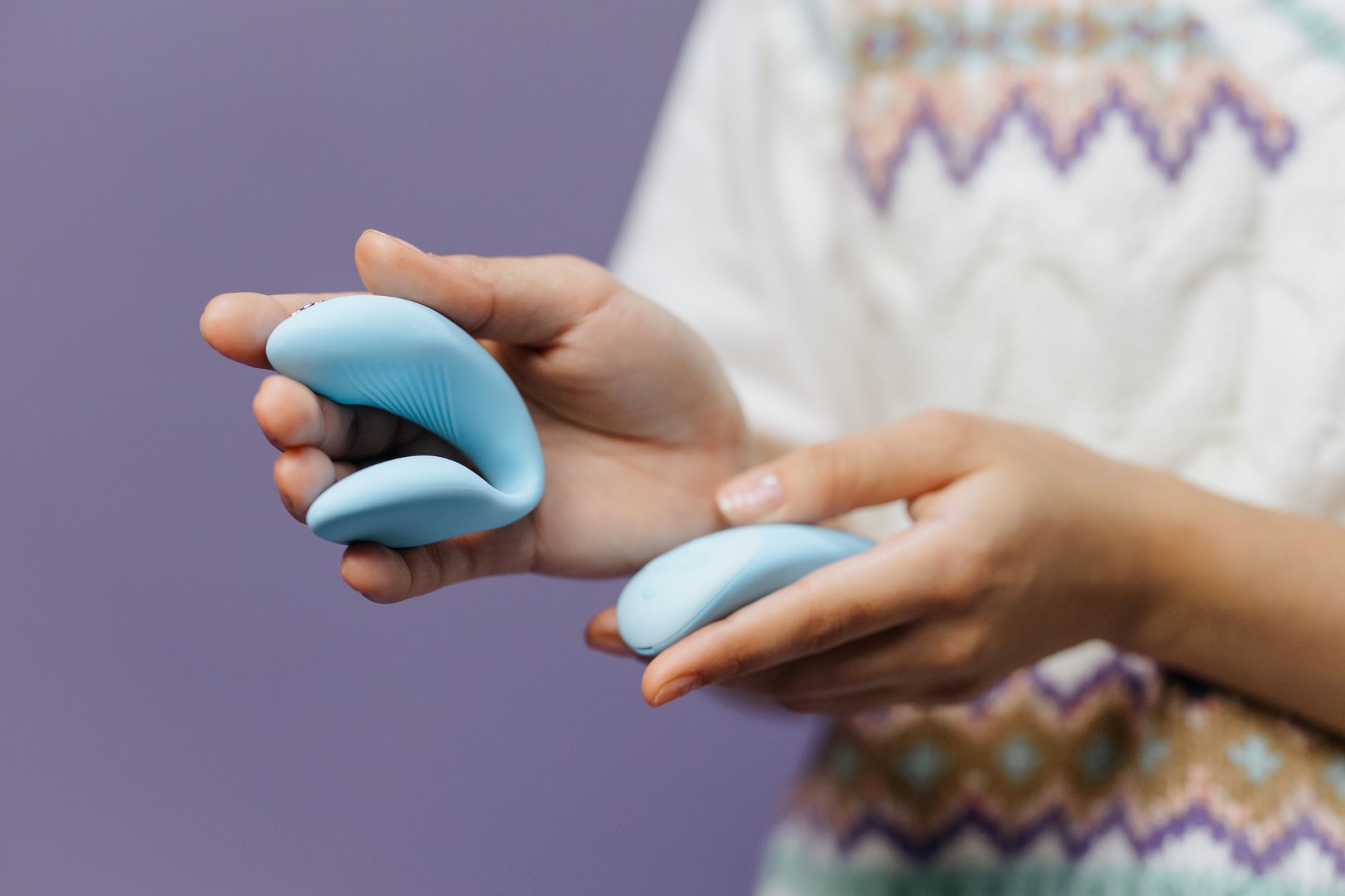
Third, introduce a lemon vibrator. Start on the lowest setting. Lemon clitoral vibrators work through suction and pulsation, which means they engage pleasure differently than friction-based toys. The sensation is often more diffuse and less intense than you might expect, which actually helps when you're tense. Less pressure feels better.
Fourth, let your mind wander. You don't need to focus on your partner or fantasize about reconciliation. Pleasure doesn't require a narrative right now. Let yourself feel what you feel without trying to make it mean something about your relationship.
The entire session doesn't need to end in orgasm. If it does, great. If it doesn't, you've still done something important. You've reconnected with your own capacity for pleasure.
What to do if shame or guilt shows up
Many people feel conflicted about solo pleasure during relationship stress. You might think: shouldn't I be trying to fix things instead? Shouldn't I be focusing on our connection?
Honestly, no. Taking 20 minutes to use a lemon vibrator is not infidelity. It's not a betrayal. It's maintenance.
If your partner has a problem with you using a vibrator solo, that's a separate conversation, and it's worth having with a therapist. Partners who forbid solo pleasure are trying to control access to your nervous system. That's a red flag, and it's worth examining whether the relationship stress you're experiencing is coming from normal conflict or from a deeper pattern of control.
For most couples, the guilt or shame is internal. You feel like you should be suffering alongside the conflict instead of finding relief. That's a learned belief, not a truth. Your pleasure doesn't take away from relationship repair.
Using lemon vibrators as a conversation starter
Eventually, the conflict needs to be addressed with your partner. Solo pleasure is a bridge, not a permanent solution.
But here's what I've seen happen: people who reclaim solo pleasure during relationship stress often feel more resourced when they finally sit down to talk things through. You're not operating from pure depletion. You've reminded yourself that good feelings are still possible.
When you're ready to talk to your partner about what's been happening, you can start from a place of, "I've been using time alone to reconnect with myself because the stress between us has made physical connection difficult for me right now. I'm not doing this instead of working on us. I'm doing this so I have the bandwidth to work on us."
That's different than saying, "I've been sneaking off with a vibrator because you're stressing me out." One is resourcefulness. The other is accusation.
Many couples find that when both partners are permitted solo pleasure during conflict, the pressure to perform sex as a bonding ritual decreases. And then, paradoxically, actual desire returns faster.
The lemon vibrator advantage when stress is high
If you're new to lemon vibrators and you're in a heightened stress state, the fact that they work through suction rather than vibration alone is actually perfect for you right now.
Suction-based lemon clitoral vibrators engage nerves in a way that feels more focused without being aggressive. When you're tense, aggressive stimulation can feel jarring. Lemon vibrators let you ease in. You control the intensity entirely. You can start at pattern one and move up, or stay low the entire time.
They're also quiet, which matters if your living situation is shared and you want privacy without obviously closing a door with the lights off. You can use one in a few minutes and feel the benefit.
When to know it's time to get professional help
If you're six months into consistent relationship conflict and solo pleasure isn't helping you feel any better overall, that's a sign you need couples therapy. Solo exploration can bridge a gap, but it can't repair a broken foundation.
If your partner becomes more resentful about your solo time, that's also a sign. Healthy partners might feel a little jealousy or curiosity about your vibrator, but they don't forbid it or use it as ammunition in arguments.
If you find yourself reaching for the lemon vibrator every night because the relationship is actively painful, you're using pleasure to numb rather than to heal. That's the moment to stop and get support.
Relationship stress is temporary, even when it feels permanent. Pleasure is a right, even when things are hard.
Frequently Asked Questions
Can using a vibrator alone make my relationship problem worse?
Not if you're using it as maintenance, not as escape. The problem is if you're using pleasure to avoid having difficult conversations. Solo exploration should happen alongside relationship work, not instead of it. If your partner feels abandoned because you're prioritizing self-care, that's a conversation to have together, possibly with a therapist. But the vibrator itself is not the problem.
How often should I be using lemon vibrators if my relationship is in crisis?
There's no rule. Some people find 15 minutes twice a week is restorative. Others prefer once a month. The goal isn't frequency, it's reconnection. Use it when you need a break from stress and when you have privacy to actually be present with yourself. If you're using it every day as a way to escape the relationship, that's worth examining.
Should I tell my partner I'm using a lemon vibrator during our rough patch?
It depends on your relationship and your partner's approach to sexual autonomy. Some partners want to know everything. Others respect privacy. In healthy relationships, solo sexual exploration is considered private unless you choose to share it. If you feel like you need to hide it, that's worth exploring in therapy. The hiding part is often the real issue, not the vibrator.
Will using a vibrator alone make it harder to orgasm with my partner later?
No. This is a myth. Pleasure is not a finite resource. Using a lemon vibrator doesn't deplete your capacity for arousal with a partner. If anything, remembering that you can feel pleasure independently often makes partnered sex feel less pressured when things improve.
What if I feel guilty enjoying pleasure while my relationship is struggling?
Guild is a learned response, not a moral truth. Your pleasure is not selfish. Your nervous system needs relief from chronic stress. Taking care of yourself doesn't mean you don't care about fixing the relationship. In fact, people who practice self-care during conflict often have more emotional resources for repair work.
How do I know if the relationship can be repaired, or if I should leave?
That's a question for a therapist, not for solo time with a vibrator. But what I will say is this: if you're in a relationship where you can't feel pleasure, can't speak your needs, and can't access solo autonomy, those are signs that something fundamental needs to change. That change might be repair or it might be leaving. Either way, reconnecting with your own body and pleasure is part of clarity.