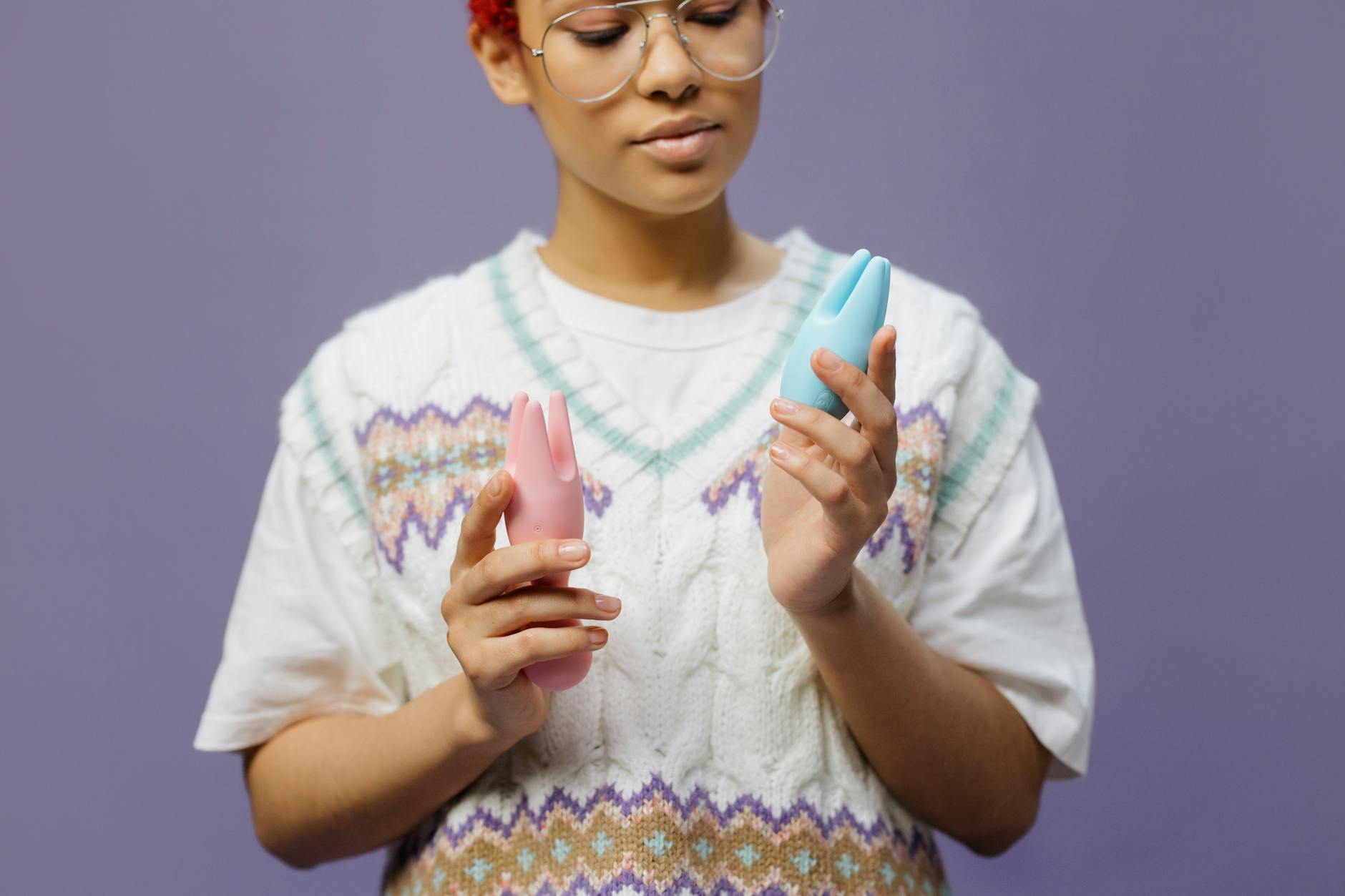
How to Use Lemon Vibrators When Physical Touch Feels Overwhelming
Let's be real. Sometimes touch doesn't feel good. Not because your partner is doing anything wrong. Not because you don't want intimacy. But because your nervous system is running hot, and skin-on-skin contact registers as irritating instead of erotic.
This happens more than you'd think. Stress, hormonal shifts, trauma responses, burnout, anxiety disorders, sensory processing differences, and even everyday overstimulation can make you recoil from physical touch that normally feels wonderful. The problem isn't your body or your relationship. The problem is that you need a different entry point into pleasure. And that's where lemon clitoral vibrators become genuinely life-changing.
Here's what I tell my clients: when touch sensitivity spikes, you're not broken. You're recalibrating. And the right tool can help you do that safely.
Why touch sensitivity changes in the first place
Your nervous system exists on a spectrum. On one end, you're calm and available for connection. On the other end, you're in fight-flight-freeze mode. Trauma, chronic stress, and sustained anxiety push you toward the activated end. So does physical exhaustion, hormonal flux, and sometimes just the weight of holding it together all day.
When your nervous system is activated, touch from another person triggers your threat-detection system. It doesn't matter if that person is safe. Your body is in protection mode, and protection mode says no contact.
Vibration operates differently. A lemon clitoral vibrator delivers consistent, self-directed stimulation. You control the intensity, the rhythm, the pressure, and the timing. There's no unpredictability, no surprise, no reliance on someone else's reading of your body. That autonomy matters profoundly when your nervous system is dysregulated.
The neuroscience of predictable stimulation
When you're using a vibrator alone, your brain knows exactly what's coming next. The pattern doesn't change. The intensity stays the same until you change it. That predictability signals safety to your nervous system. Your amygdala, which is usually running the show when you're overwhelmed, gets evidence that this experience is manageable and within your control.
Partner touch, by contrast, carries inherent unpredictability. Even a caring partner varies their pressure, changes rhythm, adjusts based on what they think you want. These micro-variations can feel destabilizing when you're already running on high alert.
Lemon vibrators sidestep this entirely. You're in charge of every variable. That control is therapeutic.
How to start using lemon vibrators when touch feels scary
First, pick a time when you're as regulated as possible. Not during a crisis moment. Not right after a triggering event. Think early morning, after a shower, or when you have genuine quiet. You're building a new neural pathway here, and you want to start from a baseline of relative calm.
Begin with the lowest setting. Seriously. If your lemon clitoral vibrator has a pattern 1 option, start there. The goal isn't intense pleasure right now. The goal is to prove to your nervous system that this type of stimulation is safe and manageable.
Let the vibration do the work. You don't need to move or do anything elaborate. Just hold the vibrator against your clitoris and breathe. Notice how the sensation feels. If it feels good, stay there. If it feels like too much, take a break. There's no timeline here.
Many of my clients find that their first few sessions last only 5-10 minutes. That's fine. You're rewiring your relationship with sensation, and that happens incrementally.
What to do when you want to transition back to partner touch
Solo use of lemon adult toys isn't forever, unless you want it to be. For some people, regular solo pleasure becomes a permanent part of their sexual life. For others, it's a bridge back to partnered intimacy.
If you're working toward reconnecting with a partner, you can use vibrator sessions as a way to coach your nervous system back toward touch tolerance. After a few solo sessions where you've proven to yourself that stimulation is safe, you might try lying next to your partner while you use your vibrator. Not for them. For you. They're just present.
Then gradually, you might ask them to be closer. Hold your hand. Breathe with you. The goal is to have your nervous system experience safety with them nearby, while you control the stimulation.
Only when that feels genuinely comfortable should you transition back to direct partner touch. And you don't have to. Some couples find that toys become part of their regular intimate life, and direct touch becomes less essential. That's a valid outcome too.
Managing the shame that often arrives with this situation
Here's what I hear a lot: "My partner is great. Why can't I just get over this? Why do I need a toy?" The shame lands hard because you're interpreting touch aversion as relationship failure. It isn't.
Touch sensitivity is a symptom of nervous system dysregulation. Treating it requires rebuilding your capacity for sensation safely. Using a lemon vibrator is medicine, not cheating or evidence of lost desire. You're using the right tool for the job.
Talk to your partner about this clearly. Frame it accurately: "When I'm stressed, my nervous system gets defensive about touch. I need some solo time with a tool that helps me feel safe again. This isn't about you. This is about me recalibrating my own body's responses."
Good partners understand this. Great partners support it.
When to bring in professional support
If your touch aversion is severe or came on suddenly after a specific event, talk to a therapist trained in trauma or somatic therapy. They can help you work through what's driving the response. If medication affects your arousal, your doctor should know about touch sensitivity too, because sometimes adjusting doses or timing helps.
If the aversion is tied to sensory processing differences, an occupational therapist who works with sensory issues can offer strategies. If it's relationship stress, couples counseling paired with solo exploration often works well.
Lemon clitoral vibrators aren't a substitute for professional help when you need it. They're a complement.
Building back to pleasure gradually
Your goal here isn't speed. It's consistency. Using a lemon vibrator once a week when your nervous system is dysregulated works better than pushing yourself to have partnered sex when you can't tolerate touch.
Over weeks or months of safe solo stimulation, your nervous system recalibrates. You prove to yourself that sensation is manageable. That pleasure is possible. That your body isn't permanently broken. These aren't small things. They rewire how your brain responds to stimulation.
Many of my clients report that after consistent solo practice with a vibrator, their touch tolerance improves dramatically. They can handle partner contact again. Some find they want it more. Some discover they're happier with a hybrid approach: toys for solo sessions, touch for connection.
All of those outcomes are wins. The point is that you moved from dysregulation to choice. That's everything.
The reality check
Lemon vibrators don't fix everything. They can't resolve deep relationship rupture or untreated anxiety or unprocessed trauma. What they do is offer a controlled, predictable, self-directed entry point into pleasure when your nervous system is too activated for partner touch. They give you agency back. They let you prove to yourself that sensation is safe. They're a bridge, not a destination.
And sometimes, that's exactly what you need to find your way back to a fuller, more connected intimate life.
People also ask
Can I use lemon vibrators if I have sensory processing disorder?
Yes, often with good results. SPD makes unexpected or unpredictable touch overwhelming. A vibrator gives you total control of the stimulus, which many people with SPD find grounding. Start on the lowest setting and take breaks frequently. You might discover that vibration actually helps you regulate rather than sends you into overload. Every nervous system is different, so pay attention to what yours tells you.
What if my partner feels rejected when I use a vibrator instead of wanting their touch?
This is worth naming directly. You might say: "I'm using this because my nervous system is dysregulated right now, not because I don't want you. Touch is triggering my threat response at the moment. I still love you and value intimacy with you. I just need a different pathway back." Many partners feel relieved to know it's not about them. Some even feel grateful that you're taking care of your own nervous system instead of forcing touch that leaves you both frustrated.
How long does it take before touch sensitivity improves?
It varies widely. Some people notice shifts in 2-3 weeks of consistent solo vibrator use. Others take 2-3 months. It depends on what caused the dysregulation. If it's acute stress, improvement comes faster. If it's chronic anxiety or trauma, you're working with deeper nervous system patterning. Consistency matters more than intensity. Ten minutes twice a week, every week, beats a single hour-long marathon session.
Can I use lemon clitoral vibrators during my period if touch sensitivity spikes then?
Absolutely. Menstrual cycles shift both touch tolerance and sensation. Some people find their clitoris is more sensitive during certain phases. A vibrator lets you control that intensity precisely. If your sensitivity spikes during your period and you want solo pleasure, this is a perfect use case. You're working with your cycle, not against it.
What's the difference between using a vibrator for sensitivity issues versus using one for pleasure normally?
Intent and pacing. When touch sensitivity is the issue, you're going slower, using lower settings, and building tolerance gradually. You might spend weeks at pattern 1. When you're using a vibrator for regular pleasure, you might jump to patterns 4-5. The tool is the same. Your approach is gentler and more intentional when you're rebuilding safety with sensation.
Is there a risk of becoming dependent on vibrators if I use them to manage touch sensitivity?
No solid evidence suggests this happens in the way people fear. What does happen is that your nervous system learns that vibration feels safe and manageable. That's not dependence, that's successful nervous system regulation. You might discover you prefer vibrators to touch in some contexts. That's a preference, not a problem. You can always explore other sensations later if you want to.