
Here's what nobody warns you about
Hormonal shifts change sensation. Not overnight, not dramatically, but in ways you'll notice first thing in the morning or mid-week when your body feels like it belongs to someone else. The clitoris is wildly sensitive to hormonal fluctuation. Estrogen, progesterone, testosterone — they all shape how quickly you feel arousal, how intense sensation registers, and how many touches it takes to cross into pleasure.
The trap most people fall into is thinking the sensation loss is permanent. It isn't. It's a recalibration. And lemon clitoral vibrators, when used with the right technique, can actually become more effective during hormonal dips than they ever were before.
What's actually happening in your body
When hormones shift, three things change in the genital tissue. First, blood flow patterns alter. Less blood to the clitoris means fewer nerve endings light up during touch. Second, the tissue itself changes thickness and sensitivity. A clitoris bathed in higher estrogen is more swollen and responsive; when estrogen dips, the tissue contracts slightly and sensation becomes more muted. Third, your nervous system's threshold for arousal moves. It takes longer to trigger, and the path from zero to arousal is less direct.
But here's the part that changes everything: the suction mechanism in lemon vibrators works differently when sensation is lower. Instead of relying on you to already be partially aroused, suction creates arousal by drawing blood into the tissue. It's not waiting for your body to warm up. It's actively warming it up.
That's why people often report that their lemon vibrator becomes more essential, not less, during hormonal cycles when sensation normally dips.
The two-stage warm-up system
When sensation is lower, you need to think of pleasure in two distinct stages, not one long gradient.
Stage one: priming without expectation. Spend 10-15 minutes with your lemon vibrator on the lowest setting (pattern 1 or 2) applied gently over your underwear or through clothing. Don't aim for arousal yet. You're just introducing sensation, waking up the nervous system's attention to that area. This is the difference between yanking off a Band-Aid and peeling it slowly. Your body needs permission to notice.
Stage two: active engagement. Only after that 10-15 minute window move the vibrator directly to bare skin and bump up to pattern 3 or 4. Now you're working with a primed nervous system instead of trying to shock it into attention.
Most people skip stage one entirely and then wonder why their lemon vibrator isn't working. When sensation is already low, jumping straight to intensity is like trying to light a match in the wind.
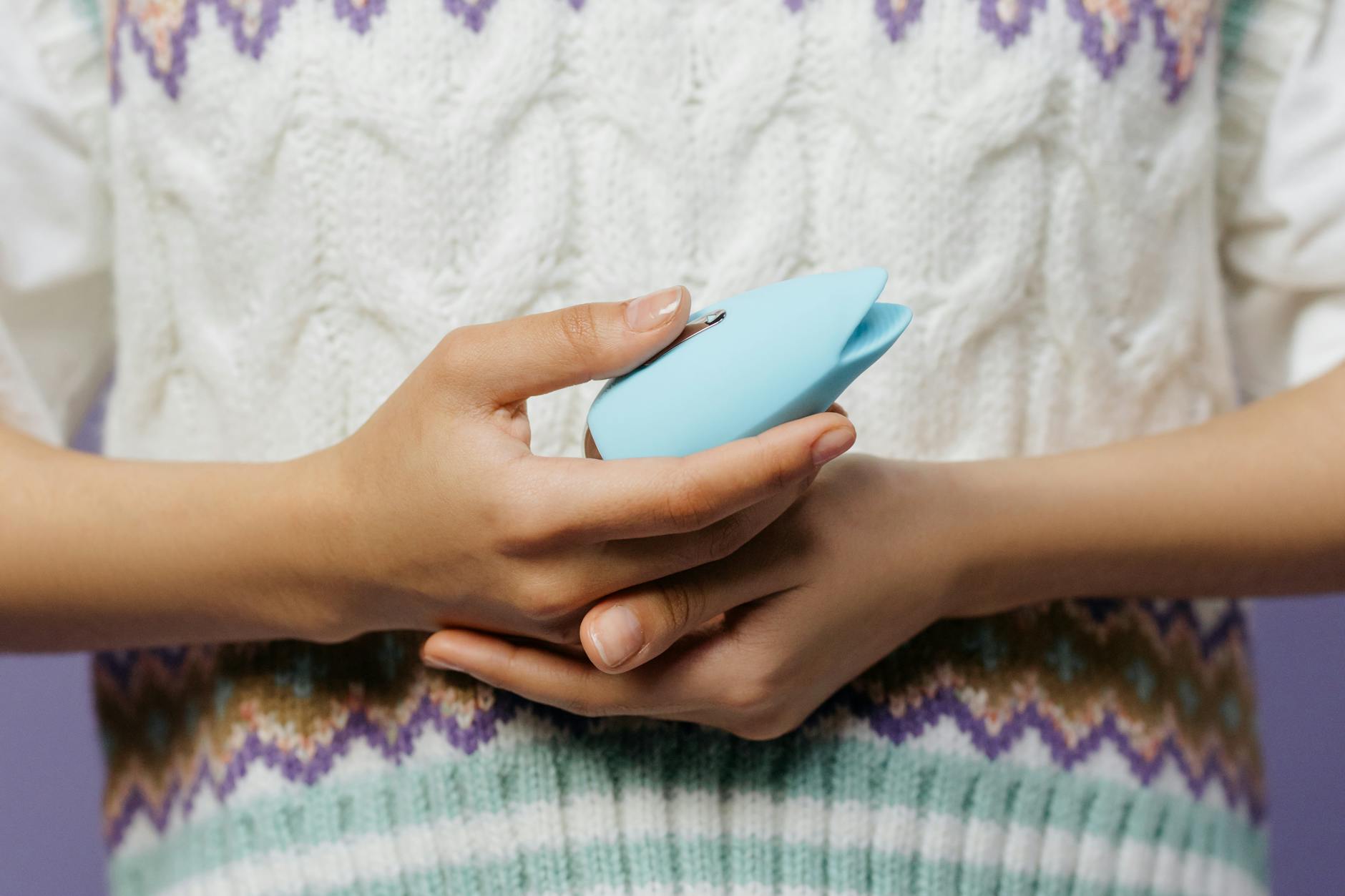
Photo by cottonbro studio on Pexels
Positioning shifts that matter
When sensation is dulled, the angle and location of contact matter exponentially more than they normally do. Here's what I recommend:
Move around the perimeter first. The clitoris itself is often the least sensitive area during hormonal dips. The tissue immediately surrounding it, and the inner labia, often register sensation more acutely. Start your lemon vibrator on the surrounding tissue. Let the suction pull sensation inward. Only when you feel that gathering pull move directly over the clitoral glans.
Try sustained positioning over micro-movement. When sensation is high, moving the vibrator around feels amazing. When it's low, sustained contact in one spot allows the suction to build tissue response over time. Stay in one position for 30-60 seconds before shifting.
Angle toward the pubic bone. The underside of the clitoris, where it meets the body, often has denser nerve clusters. A slight upward angle, pressing gently toward the pubic bone while using your lemon clitoral vibrator, can unlock sensation that direct contact misses.
The mental component that actually works
When sensation is low, your brain can either spiral into frustration or it can redirect. There's a difference between "this isn't working" and "I need to focus differently." Here's what actually shifts arousal when your body feels numb:
Remove the outcome. Stop measuring success by whether you orgasm. Instead measure it by whether you feel any shift in sensation. Did your clitoris feel even slightly fuller? Did your breath deepen? These micro-signals are what you're tracking when sensation is low. They're not substitutes for pleasure. They're the foundation sensation rebuilds from.
Invest in fantasy or sensation memory. When physical sensation is muted, mental arousal becomes the main channel. Use your lemon vibrator as an anchor while you recall a time when sensation was vivid, or imagine a scenario that typically ignites you. You're not being weird or broken. You're using the one sensory input that's still fully online.
Slowness becomes a feature, not a compromise. Slow is often coded as "less intense," but when sensation is low, slow actually allows you to notice subtler shifts in pleasure that speed would erase. The slowest pattern on your lemon vibrator, applied with intention, can feel more pleasurable than a faster pattern on days when sensation is muted.
When hormonal drops happen on a cycle
If your sensation dips happen at predictable times in your cycle (most common in the luteal phase, the week or two before menstruation), you can actually prep your nervous system in advance.
Two or three days before your sensation typically drops, use your lemon vibrator more frequently and at higher intensities. You're essentially stockpiling arousal resilience. It sounds strange but it works. Your nervous system remembers activation. When the hormonal dip hits, you're starting from a place of recent familiarity with arousal, not cold.
During the dip itself, lower your expectations but don't lower your effort. Some of my clients report that their orgasms during low-sensation phases feel different but sometimes more textured, more localized, less about the big explosive release and more about a slow-building wave. Different isn't worse. It's just different.
What to avoid when sensation is low
Don't switch to a higher intensity vibrator thinking more power is the answer. The problem isn't vibration intensity. It's tissue responsiveness. A stronger vibration on numb tissue is just louder numbness. Your lemon clitoral vibrator was designed for this exact scenario. Trust the mechanism.
Don't add penetration as a workaround. When clitoral sensation is low, the temptation is to shift focus to vaginal sensation instead. Sometimes that works. Often it just diffuses your attention and makes the session feel like you're chasing sensation instead of building it. Stay focused on the clitoris. Everything else is a distraction.
Don't expect the same timeline. If you normally come in five minutes, give yourself 20. If you normally need 20, give yourself 30 or 40. The clock is not your friend when sensation is low. The only timeline that matters is the one your body needs.
Quick wins for immediate situations
If you're in a moment right now where sensation feels flat, try this sequence.
Start with your lemon vibrator on pattern 1, over clothing, for a full 10 minutes while you think about literally anything but arousal. Read something. Daydream. Let your nervous system work in the background.
Move to bare skin, still pattern 1, and spend another 5 minutes around the outer labia and the tissue surrounding your clitoris.
Only then move to pattern 2 or 3, directly over your clitoral glans, and stay there for as long as feels good. Don't count strokes or measure progress. Just notice what you notice.
If nothing shifts in 15 minutes of direct stimulation, that's information, not failure. Your body might need more sleep, more water, less stress, or more time. Lemon vibrators work beautifully. They don't work against your nervous system.
FAQ
Does hormonal birth control permanently affect sensation when using lemon sexual toys?
Not permanently, but it can for as long as you're on it. Different formulations affect sensation differently. Some people report that certain progestin doses numb sensation more than others. If you're noticing a change right after starting a new birth control, give it three months. Your body often adjusts. If it doesn't, talk to your doctor about different formulations. The issue isn't your lemon vibrator. It's finding the hormonal environment where your body thrives.
Can I use my lemon clitoral vibrator more frequently to combat low sensation?
Yes, but not obsessively. Frequent use actually can prime your nervous system to respond better, especially during hormonal dips. The trick is frequency without desperation. Use it several times a week, not multiple times daily, or you'll numb yourself further. Think of it like exercise. Consistency helps. Overdoing it backfires.
How long does it take for sensation to return after hormonal shifts?
Depends on the shift. If it's a cycle-related dip, sensation typically returns within days once hormone levels shift back. If it's from birth control or other medications, adjustment takes weeks to months. Menopause-related changes are longer, typically 3-6 months of consistent work with your lemon vibrator before you notice clear shifts. Patience actually matters here.
Is low sensation during hormonal shifts a sign something is wrong?
Not usually. Fluctuating sensation with hormones is completely normal. Your clitoris is a hormone-responsive organ. But if sensation loss feels sudden, extreme, or accompanied by pain, that's worth mentioning to a doctor. Most cases are just your nervous system doing what hormones tell it to do. Your lemon sexual toys will still work beautifully once you adjust your technique.
Should I switch to a different toy if my lemon vibrator doesn't feel effective during low-sensation phases?
Honestly, no. The problem isn't the tool. It's the approach. Lemon vibrators, especially the suction mechanism, are actually ideal for low-sensation periods because they create arousal rather than relying on existing arousal. Switching toys usually leads to the same muted result. What works is adjusting your timing, positioning, and expectation, not the vibrator itself.
Can I use lube to increase sensation when hormones make me feel numb?
Yes, and good lube is genuinely helpful. Water-based lubes reduce friction, which can feel less stimulating when sensation is already low. Silicone-based lube feels richer and can help you notice subtle sensation more easily. Test both and see what your body prefers during low-sensation windows. This is one of the easiest adjustments to make and often the most effective.
The real takeaway
Sensation changes. It always has, and it always will, across your lifetime and across your cycles. What doesn't change is your capacity for pleasure or your body's ability to respond when you give it the right conditions.
Your lemon vibrator isn't meant for times when everything's easy. It's meant for exactly these moments. When sensation is low, when your body feels unfamiliar, when the usual pathways to arousal feel harder to find. That's when the combination of suction, intention, and patience actually shines.
If you're navigating bigger questions about how your body works overall, talking with a partner or a professional can help too. Reach out anytime you want support.