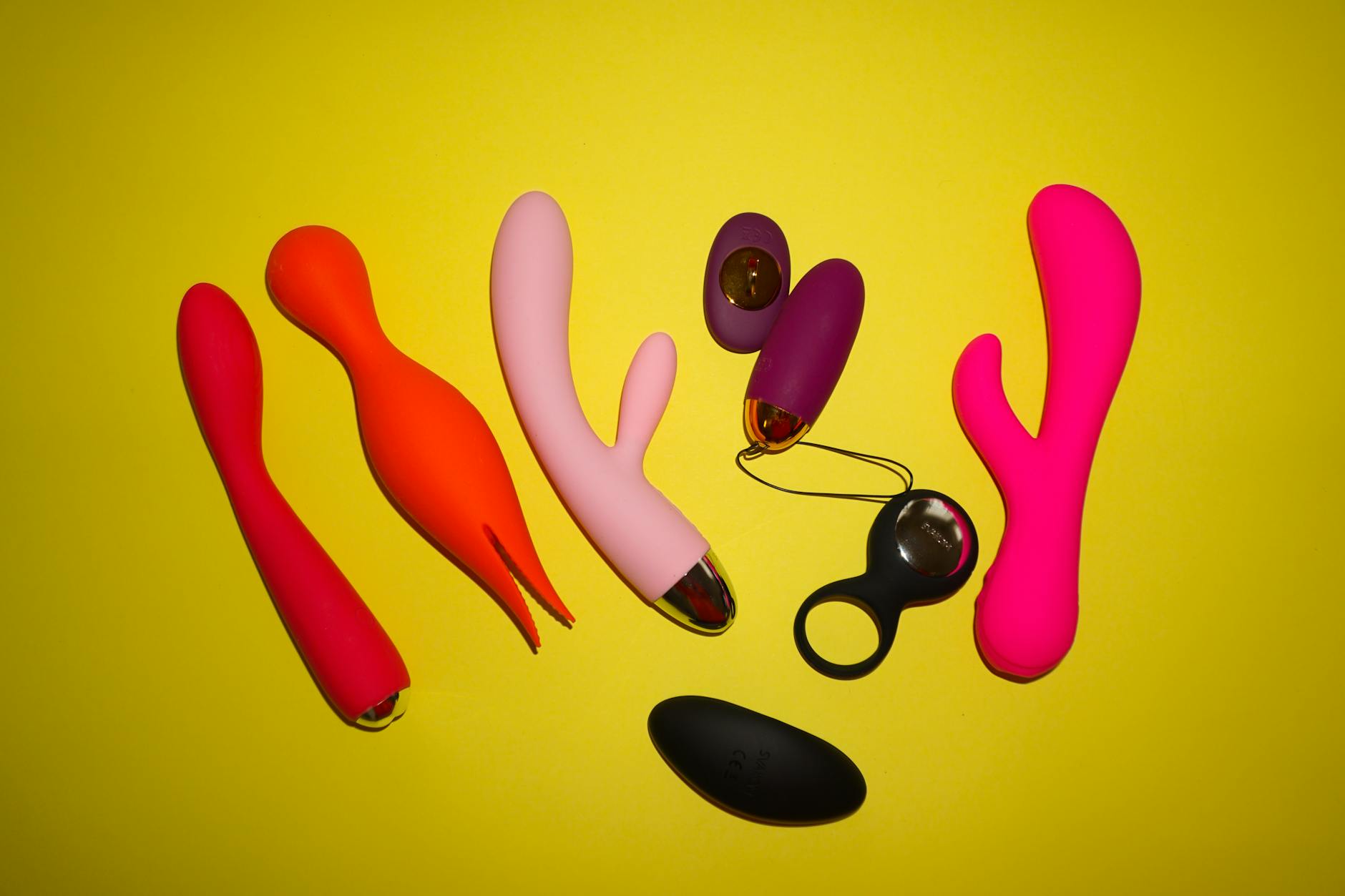
Let's talk about what nobody warns you about
You move. You change jobs. You finish school. A parent gets sick. A relationship deepens. You become a caregiver. And suddenly your desire goes somewhere you didn't expect. Not gone, usually. Just... different. Quieter. Harder to access. Like it moved to a part of your brain you can't quite reach anymore.
The worst part? You think something's broken. But it's not. Your body and mind just entered a recalibration phase, and that's actually normal biology meeting normal life.
What major life transitions actually do to desire
When everything around you shifts, your nervous system shifts first. A big move means decision fatigue. A new job means your brain is running at 95 percent capacity just learning systems and names. Caregiving means emotional load that sits in your chest all day. Your body is in resource-conservation mode, which means desire gets put on pause because, evolutionarily, it's not helping you survive the immediate threat or change.
That's not depression, usually. That's not a failing relationship. That's your brain saying, "Hey, we're using all available attention for something else right now."
The second thing that happens is cognitive. During transitions, you're hyperaware that your life is different. You might feel unmoored, or tentative, or like you're performing a new version of yourself that doesn't quite fit yet. That mental noise is loud, and it sits directly between you and arousal.
The physical reset that happens
Your cortisol stays elevated during transitions. This suppresses the neurotransmitters that kick off desire (dopamine, serotonin). Your sleep often gets worse, which makes cortisol worse, which makes desire worse. It's a loop.
At the same time, your relationship to your body often shifts. If you're busy or stressed, you stop noticing physical sensation. You shower on autopilot. You eat standing up. Touch feels like just another thing to manage rather than something pleasurable. This sensory disconnection makes arousal feel genuinely inaccessible, not just low.
Here's what doesn't change: your capacity for pleasure. Your nerve endings are still there. Your clitoris still has eight thousand nerve endings. Your brain still has the same capacity for orgasm. You're not less capable. You're just temporarily running on a different circuit.
How lemon vibrators help you rebuild the pathway
Lemon clitoral vibrators work particularly well during transitions because they bypass the thinking part of arousal. You don't need to "get in the mood" or wait for desire to build naturally. The vibration creates a direct signal to your nervous system that says, "Hey, pleasure is available right now."
This matters because during transitions, waiting for desire to arrive on its own often means waiting forever. But if you create the sensation first, the desire follows. It's backwards from how it works when you're stable, but it works.
The suction technology in lemon adult toys (the Lemon Vibrator uses gentle air-suction stimulation) is especially useful here because it doesn't require the same mental focus that direct vibration sometimes does. You can literally just... let it work. No performance pressure. No checking in with yourself about whether you're aroused enough. The sensation does the job.
Starting when everything feels foreign
If you've just moved, changed jobs, or entered a new life phase, here's what usually helps:
First, pick a time when your brain is least occupied. Not right after work stress. Not in the morning when you're already behind. Afternoon on a weekend, or early evening if you have kids who go to bed at a predictable time. You're looking for maybe 20 minutes where you don't have an urgent task waiting.
Second, don't expect instant arousal. You're building a new pathway, not flipping a switch. Use a lemon vibrator at pattern 1 or 2. Just feel it. Your job right now is sensory reconnection, not orgasm. Some people need three or four sessions of this before their brain goes, "Oh, okay, pleasure is still possible."
Third, use it alone first. Partnership pleasure is lovely, but during transitions, solo use removes the pressure to also manage a partner's experience or worry about whether you're "good enough" at this. You're just exploring.
Reconnecting with a partner through transitions
If you have a partner and your libido has shifted, the most important conversation is not about the vibrator. It's about the transition itself. "I'm overwhelmed" is a different statement than "I don't want you." Help your partner understand that your arousal is temporarily redirected, not dead.
Then, when you're ready, lemon sexual toys can be a bridge back to partnered pleasure. Some couples find that using the vibrator together (you controlling it, them present, no pressure for penetration or quickies) rebuilds playfulness and removes the "Am I doing this right?" anxiety.
Or use it solo, then come back to your partner afterward, when your nervous system has gotten the signal that pleasure is still available to you. That can actually help rebuild intimacy because you're returning to the partnership from a place of fullness rather than scarcity.
The timeline usually looks like this
Weeks 1-2: You use the lemon vibrator and feel numb or distant. That's fine. You're waking up sensation.
Weeks 3-4: You start noticing the vibration. Your body begins to remember what pleasure feels like. Sometimes you orgasm, sometimes you don't. Both are fine.
Weeks 5-6: Your brain starts to anticipate it. You think about it during the day. Desire, actual desire, starts to creep back in around the edges.
Weeks 7+: Your libido stabilizes at whatever your new normal is. It might be lower than pre-transition. It might bounce back fully. It usually lands somewhere in the middle.
The point: this timeline requires consistency, but not perfection. Three times a week beats once every two weeks.
When you need to pause and assess
If six weeks have passed and you still feel completely numb to pleasure, or if you feel depressed about other things too, talk to a therapist or doctor. Transitions can trigger actual depression, and depression looks like low libido but has a different root. The vibrator helps with arousal access, but it's not a treatment for depression.
Similarly, if your partnership feels distant and the lack of desire is actually about resentment or disconnection that predates the transition, the lemon vibrator alone won't fix it. You might need a couples therapist to work through the relational stuff while you're rebuilding physical connection.
The part nobody mentions
Major transitions are actually a chance to relearn your own pleasure without the scripts you've been following. Before the transition, you might have had a set routine with your body, your partner, your desires. A life shift creates space to experiment. Some people find their most satisfying pleasure during or right after a big transition because they're not performing someone else's version of sexuality anymore.
Your libido didn't disappear. It just needed time to figure out what it looks like in this new chapter.
People also ask
How long after a major life change does libido usually come back?
It varies wildly, but most people report that about six to twelve weeks after a transition stabilizes, arousal starts to return. The key is that the transition itself has to feel somewhat settled. If you're still in active change (still unpacking boxes, still learning the new job), your nervous system might not shift back to pleasure mode yet. Once you have some routines and predictability again, desire usually follows.
Can I use lemon vibrators while I'm still actively stressed about the transition?
Absolutely. In fact, that's exactly when they help most. The vibrator isn't asking your brain to generate arousal from nowhere. It's providing external stimulus that can quiet the stressed part of your brain for a little while. Some people find that regular use during high-stress periods actually reduces overall cortisol and helps them sleep better, which then helps libido even more.
My partner thinks my low desire means I'm not attracted to them anymore. How do I explain that it's the transition?
Use concrete examples. "My brain is using 90 percent of its energy on X right now" lands better than "It's not you." You might say something like, "I'm attracted to you. I'm just mentally exhausted, and my body hasn't reconnected with pleasure yet. This isn't about how I feel about you. It's about where my nervous system is." Then follow it with action, like using a lemon vibrator with them present, or scheduling specific time together once the immediate crisis part of the transition passes.
Is it normal for desire to come back differently than it was before?
Completely. Sometimes post-transition desire is lower overall but feels more intentional. Sometimes it's higher and less tied to routine. Sometimes you want different things. This is actually an opportunity to renegotiate what pleasure looks like for you now. Many people discover they prefer clitoral vibrators more during this phase because the directness cuts through the mental noise.
What if the transition is permanent and I'm entering a new life phase (empty nest, career change, retirement)?
Then your libido is recalibrating to a new baseline, which is normal and okay. The shift from "parent of young kids" to "parent of adults" or from "working professional" to "retired" rewires what desire looks like. Some people's libido drops and stays lower. Others find it bounces up because they have more energy and mental space. Use lemon clitoral vibrators during this adjustment period to reconnect with your body, and let your desire settle where it naturally lands rather than trying to force it back to where it was.
Can lemon adult toys help if the transition is relationship-based?
If the transition is something like "we just moved in together" or "we got married" or "we decided to have a kid," then yes, lemon vibrators can help you reconnect to your own pleasure during that adjustment. But if the transition is "I found out my partner was unfaithful" or "we're growing apart," the vibrator is a tool for self-care, not a fix for the relationship issue. Use it to take care of yourself while you figure out what you actually want from the partnership.
What happens next
Your libido isn't broken. It's redirected. And that redirection is temporary. Using a lemon vibrator isn't about forcing arousal back. It's about sending your nervous system the signal that pleasure is still possible, even during hard things. Once your body remembers that, and once the transition settles enough that your brain has some bandwidth back, desire usually returns. Sometimes it's the same as before. Often, it's better.