
The mismatch nobody wants to talk about
One partner wants sex three times a week. The other wants it once a month. This isn't a sign that something is broken. It's actually one of the most common relationship patterns, and it creates a predictable tension: the higher-desire partner feels rejected, the lower-desire partner feels pressured, and both end up resentful.
Here's what most couples don't realize. Lemon vibrators and other clitoral toys don't solve desire mismatch. But they do something almost as valuable: they create a third option that neither partner had before.
Why desire mismatch happens (and why it's not about you)
Different libidos are rarely about attraction or commitment. They're usually about biology, stress, life stage, or how you each experience arousal. One partner might have a responsive desire pattern, meaning they need foreplay and mental connection to want sex. The other might have spontaneous desire, meaning they wake up ready. Neither is wrong. They're just different operating systems.
When the mismatch is severe, one approach is asking the lower-desire partner to want sex more often. This almost never works. The pressure actually tanks desire further. The better approach is asking both partners to expand their definition of intimacy.
This is where clitoral vibrators enter the conversation. Not as a replacement for partnered sex, but as a tool that lets the higher-desire partner experience pleasure on their schedule while the lower-desire partner stays connected without feeling obligated to perform.
What actually happens when you introduce a lemon vibrator
I've worked with dozens of couples where one partner was initiating sex multiple times a week and the other was dreading it. Once they introduced a Lemon Vibrator into their routine, something shifted.
The higher-desire partner could pleasure themselves without resentment or rejection. The lower-desire partner could be present, kissing or touching, without the pressure of maintaining an erection or performing. Sometimes they joined in with their own arousal. Sometimes they stayed clothed and just held each other.
Neither person was getting their full fantasy. But both felt less alone.
A Lemon Clitoral Vibrator works particularly well in this context because it's fast. Air-suction technology means you can reach orgasm in 5-10 minutes, even without extensive foreplay. That matters when one partner wants quick relief and the other wants to stay connected without a 30-minute sex session.
The conversation you need to have first
Don't just hand your partner a toy and hope it solves things. That's a band-aid and also slightly insulting. Instead, frame it as "I want us to both feel good, and I think we've been stuck in a pattern where one of us always feels frustrated."
Be specific. If you're the higher-desire partner: "I miss feeling wanted, and I don't want to pressure you. Could we try something that lets me feel pleasure while we're still connecting?" If you're the lower-desire partner: "I feel bad that I'm not matching your energy, and I don't want sex to become a source of stress. What if we had more options?"
Make it about expansion, not replacement. Partnered sex isn't off the table. You're just adding flexibility.
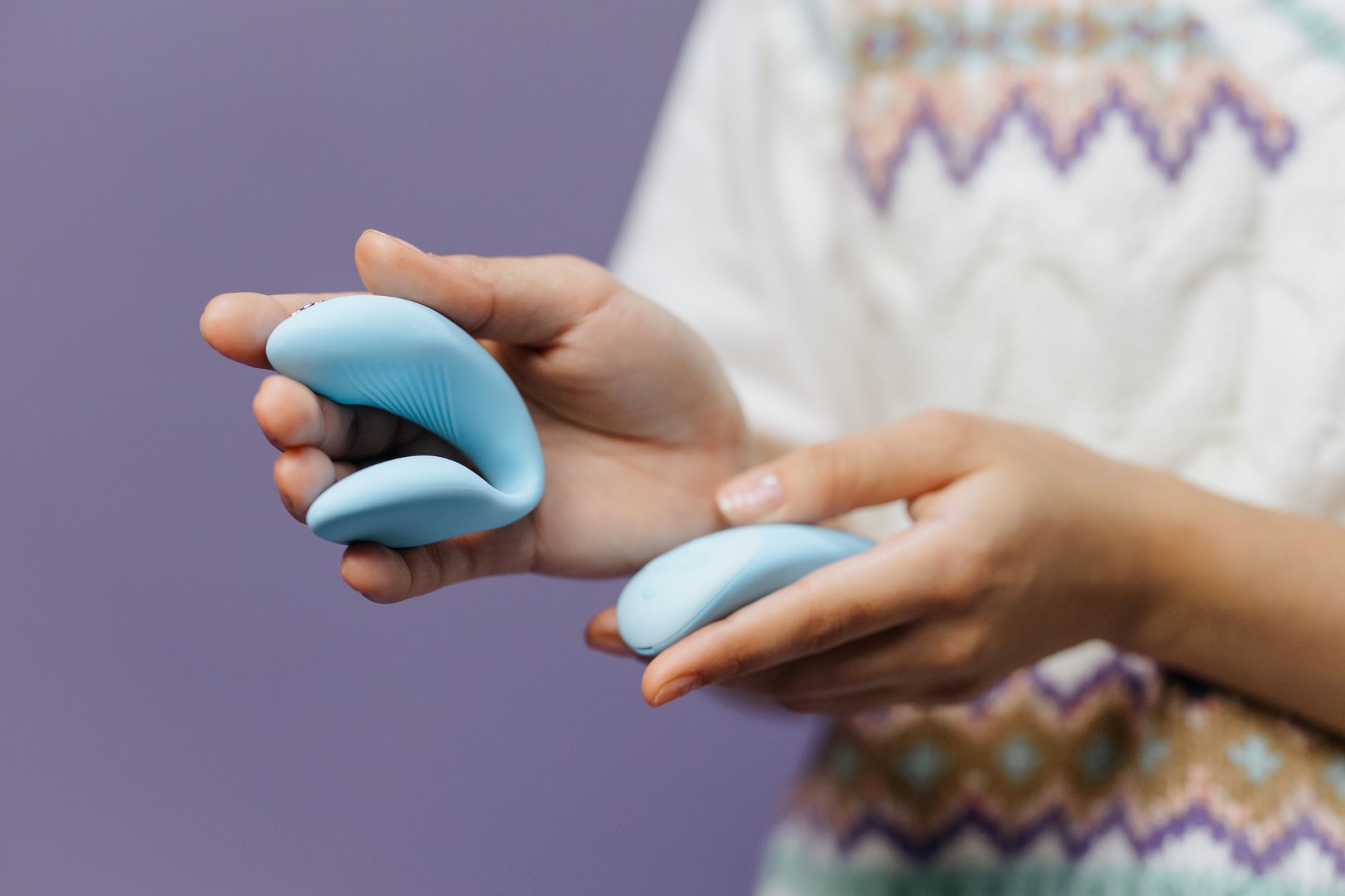
Photo by cottonbro studio on Pexels
How to actually use this in your routine
There are roughly three ways couples integrate a clitoral vibrator when desire frequency is mismatched.
Option 1: Partnered but independent. Your partner touches themselves with the Lemon Vibrator while you kiss them, touch their chest, or use your hands elsewhere. You're both engaged but on different pleasure tracks. This takes 10-15 minutes and keeps you both feeling intimate without the pressure of synchronizing arousal.
Option 2: Solo with presence. One partner uses the vibrator while the other is in the room, reading, working, or lying next to them. Sounds less intimate, but it's not. Knowing your partner is there without demanding anything from you is its own form of closeness. And you're free to join in if arousal builds.
Option 3: The quick reconnection. Higher-desire partner uses a Lemon Clitoral Vibrator for a fast solo orgasm before bed or in the morning. It takes the edge off, removes the mental resentment of being turned down, and means you both sleep better. Takes five minutes. Changes the tone of the entire day.
All three options work because they remove the false choice of "have sex on my partner's timeline" or "don't have sex." Suddenly there's a middle ground.
Why this actually builds intimacy (not kills it)
CounterIntuitively, adding toys to a relationship with mismatched desire often strengthens it. Here's why.
When desire mismatch goes unaddressed, it becomes resentment. The higher-desire partner feels rejected repeatedly and starts withdrawing emotionally. The lower-desire partner feels constant pressure and starts avoiding physical affection entirely. Sex becomes the entire conflict, which is exhausting.
But when both partners agree to a different framework, something releases. The higher-desire partner no longer has to make their partner feel bad about not wanting sex. The lower-desire partner no longer has to choose between their own needs and their partner's feelings. You're teammates again, not adversaries.
Introducing a Lemon Vibrator or other clitoral toy signals that you're serious about solving this together. It says, "Your pleasure matters independently. My pleasure matters. And our connection matters more than us wanting the exact same frequency."
That's powerful.
Managing the emotional stuff underneath
Sometimes desire mismatch is purely biological. Sometimes it's stress, body image, past sexual trauma, or relationship disconnection wearing a desire-mismatch disguise.
Before you invest in toys, check in with yourself. If you're the lower-desire partner, are you actually not interested in sex, or are you not interested in sex with your partner right now? Those are very different problems. The first one benefits from a vibrator and expanded options. The second one might need couples therapy.
If you're the higher-desire partner, is the gap about frequency, or is it about feeling wanted? Because a toy can't solve the latter. That requires your partner to actually desire you, which isn't something you force with better tools.
If both of you are emotionally solid but just have different baseline drives, then a clitoral vibrator and some experimentation is genuinely the answer.
The practical stuff: choosing and using
If you're new to this, start with something straightforward. A Lemon Clitoral Vibrator is intuitive, fast, and designed specifically for this kind of use. It doesn't require extensive setup or learning curve.
Start with pattern 1 or 2 and work up. You don't need maximum intensity to feel good. Let your partner know when you're planning to use it, so there's no awkwardness. Some couples make it a regular time, like Saturday mornings. Others keep it more spontaneous.
After the first time, check in with how it felt. Not whether you had an orgasm, but whether it felt good. Did it reduce pressure? Did you feel closer, or more disconnected? There's no right answer. Adjust based on what actually works for your dynamic.
When this isn't enough
If you've tried toys, communication, and different frameworks, and the desire gap still feels insurmountable, that's a sign you might need a therapist who specializes in sex and relationships. Some couples genuinely aren't compatible on desire. Others are just missing a key piece of information or support.
There's no shame in that. It's actually the point where professional help becomes the most valuable.
But for most couples where one partner wants sex more frequently than the other, a clitoral vibrator and an honest conversation shift things completely. You go from a problem that feels unsolvable to a problem you're handling together.
People also ask
Can using a vibrator make me want sex more often?
Sometimes, yes. If low desire is tied to numbness or disconnection from your body, exploring pleasure solo or with a partner can help. But if your lower desire is rooted in stress, depression, or relationship issues, a toy alone won't change your baseline. That said, removing pressure often helps. When you're not constantly being asked for sex, your desire might naturally increase.
Will my partner feel replaced if I use a vibrator when they want sex?
Only if you frame it that way. A clitoral vibrator isn't a replacement for partnered sex. It's a tool that lets you both get your needs met without one person sacrificing constantly. The conversation matters more than the toy. If you say, "I want us both to feel good," your partner will understand. If you just start using it without talking, that's where resentment sneaks in.
How often can I use a Lemon Vibrator without affecting my sensitivity?
Clitoral vibrators don't cause desensitization the way people worry. Your clitoris has thousands of nerve endings. Using one several times a week won't wear them out. If anything, consistent pleasure helps you stay connected to your body. Use it as often as feels good. Your body will tell you if something needs adjustment.
What if my partner wants to use it with me, but I prefer solo?
Both are valid. Some couples use vibrators together in partnered sex. Others use them separately while staying emotionally present. Some switch between both. There's no formula. What matters is that you both feel like your preferences are respected. If your partner wants more joint use and you want more solo time, that's a conversation, not a dealbreaker.
Should we be having more sex to match my partner's desire?
Not necessarily. Forcing yourself to have sex you don't want creates resentment and often kills desire further. What you should do is be honest about your baseline and then explore ways to both feel good within that reality. Sometimes that's more frequent sex. Sometimes it's toys, sometimes it's redefining intimacy to include non-sexual touch, sometimes it's accepting that you have different needs and finding a compromise.
How long does it take for a vibrator to help with desire mismatch?
Usually you notice a shift in the emotional climate within a few weeks. The pressure lifts. Both partners feel less resentful. But the deeper shift, where sex feels genuinely connected instead of obligatory, takes longer. Give it a couple of months and revisit the conversation. What's changed? What still feels stuck?
Desire mismatch is one of the most common relationship challenges, and it's almost always solvable with honesty and flexibility. When you explore pleasure outside the traditional sex framework, you often find that connection actually deepens, not weakens. Both partners feel heard. Both partners feel less alone. And you get back to actually liking each other. If you'd like personalized guidance on navigating this dynamic, reach out.