
The overstimulation spiral nobody talks about
You're in the moment. It feels good. Then it feels too intense. Your nervous system starts to panic. You want to keep going, but your body feels like it's at the edge of something unpleasant. The anxiety kicks in. Now you're stuck between desire and dread, and the whole experience collapses.
This isn't rare. And it's not a personal failure.
Clitoral overstimulation anxiety is a real, physiological response that happens when the intensity of sensation outpaces your nervous system's capacity to process it. The difference between "intense and good" and "intense and frightening" is tiny, and the jump from one to the other can happen fast. Once that anxiety fires, it shuts everything down.
Why conventional vibrators make it worse
Most vibrators work through direct vibration against sensitive tissue. You control the intensity by moving closer or farther away. But here's the catch: when you're already overstimulated and panicking, fine motor control goes out the window. Your body tenses up. Moving the toy even slightly to find relief feels impossible. You're locked in with a tool that won't stop being intense until you can coordinate your hands well enough to move it, or locate the power button in a fog of anxiety.
That's a terrible design for anyone with a nervous system that runs hot.
Lemon clitoral vibrators use suction instead. The mechanism is fundamentally different. Rather than buzzing directly against tissue, a lemon vibrator creates a gentle pulling sensation that rhythmically stimulates the area. The intensity is controlled by the suction strength, not the vibration frequency.
How the suction mechanism reduces anxiety
Three things happen differently with a lemon vibrator:
1. The sensation is less sharp. Suction feels more diffuse, more massaging. There's no single point of intense friction. For people whose nervous systems spike into overload with direct vibration, this rounded-out sensation often stays in the "intense but manageable" zone longer. You get more room before you hit the panic threshold.
2. The intensity ramp is gentler. A lemon vibrator typically has 3-6 suction levels. They tend to progress more gradually than the pattern-jumping you get with a conventional vibrator. You can move up by one level at a time without jumping from pleasant to overwhelming. That gradual progression gives your nervous system time to adjust.
3. You stay in control without thinking. The suction creates a kind of "adhesion" that feels more locked in. Once you find the right spot and level, you don't have to fidget to maintain pressure. That matters hugely when anxiety is lurking. You're not constantly adjusting, not constantly vigilant about whether the sensation is still safe. It just is.
The nervous system piece
Here's what I see in my work with couples navigating anxiety and intimacy: the moment you stop being able to control the intensity with your hands, anxiety often spikes. It feels like the toy is "doing something to you" rather than you using it. That power differential, even though it's imaginary, triggers a protective response in your nervous system.
Lemon vibrators feel different because you're still managing the experience. You choose the level. You choose where to position it. The suction holds steady until you decide to change it. That consistency is soothing to an anxious nervous system.
Building tolerance takes repetition. If you've had overstimulation panic even once, your body remembers it. The next time you use any toy, part of you is waiting for it to happen again. That anticipatory anxiety is sometimes worse than the original incident. When you switch to a lemon vibrator and have a successful, non-panicked experience, you're literally retraining your nervous system. "This is safe," your body learns. "I can handle this."
Starting with a lemon vibrator if anxiety is part of your picture
Begin at the lowest setting. Not level 2 or 3. Level 1. Spend 2-3 sessions at this level, even if it feels almost too gentle. Your nervous system needs practice believing that this tool is safe.
Use external stimulation only. Overstimulation anxiety often kicks in hardest during internal contact. If you're new to managing overstimulation, stick to external play with a lemon vibrator. Less complexity, fewer variables.
Set a time boundary, not an outcome goal. "I'm going to use this for 10 minutes and notice what feels good," not "I'm going to have an orgasm." When orgasm is the target and anxiety is present, the pressure makes everything worse. Pleasure without performance pressure is often what anxious nervous systems need.
Have a shutdown plan. Know how to turn it off without fumbling. Know where the button is. This sounds simple, but for someone with anxiety, knowing you can stop instantly is what lets you relax into it in the first place.
When overstimulation anxiety lives alongside other stuff
Maybe the anxiety isn't just about sensation intensity. Maybe it's tied to past experiences, or to trust in your current relationship, or to body image. A lemon vibrator won't fix those things. But it removes one variable.
When you're working through relational anxiety or trauma, the last thing you need is a tool that feels unpredictable or out of your control. A lemon vibrator's suction-based mechanism and graduated levels mean you can focus on the emotional piece without also managing equipment anxiety.
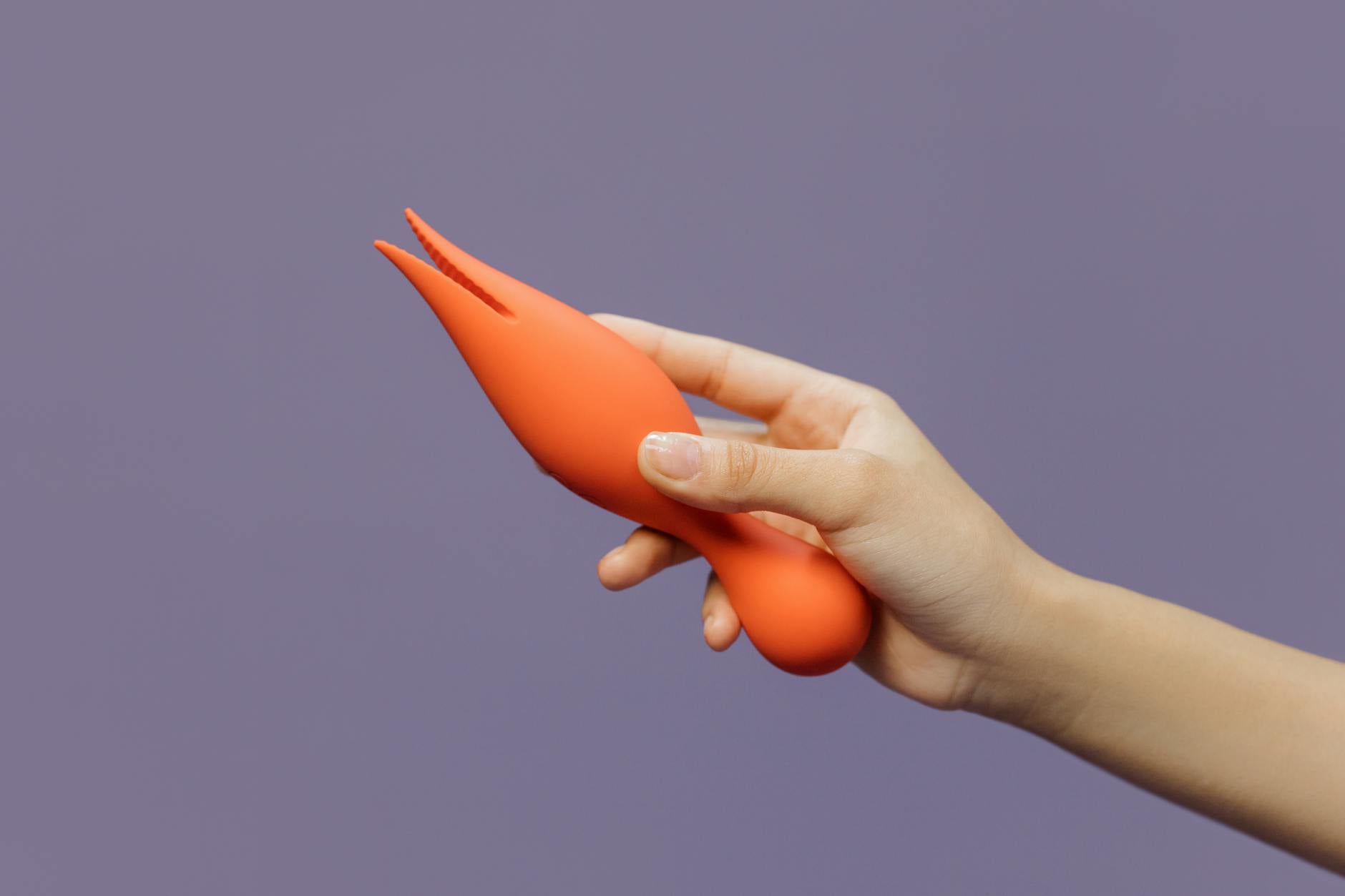
Photo by cottonbro studio on Pexels
The science of graduated exposure
This is actually exposure therapy in miniature. In clinical psychology, we use graduated exposure to help people move through anxiety. You start small. You practice succeeding at small intensities. Your nervous system learns "this is safe." Then you move up one step. That's exactly what the progression from level 1 to level 3 on a lemon vibrator does.
But here's what makes it work: the tool has to feel controllable. A conventional vibrator that jumps patterns unpredictably works against this process. A lemon vibrator's straightforward level system reinforces it.
Real talk about medication and overstimulation
Some people taking SSRIs or other medications that affect sensation report overstimulation anxiety more frequently. If that's you, talk to your doctor. There may be timing adjustments that help. But also, if you're currently using a toy that makes it worse, switching to a lemon vibrator while you're working through the medication piece could be genuinely useful.
Same goes if you're managing ADHD. The sensory regulation piece is real. Lemon vibrators' predictable suction can actually feel more soothing to an ADHD nervous system than the more chaotic sensation profile of a conventional vibrator.
When it's time to talk to someone
If overstimulation anxiety is chronic and hasn't improved even with a tool designed to be gentler, or if the anxiety has expanded to other sexual contexts, that's your signal to chat with a therapist or somatic practitioner. A lemon vibrator is a useful tool, not a treatment. But it's a tool that removes friction so you can actually work on the deeper stuff without also battling your equipment.
Your nervous system's job is to keep you safe. That's not broken. It's just sometimes too protective. The right tool helps you retrain it.
FAQs
Can overstimulation anxiety get better on its own?
Yes, sometimes. If it happened once and you've moved past it, your nervous system may naturally recalibrate. But if it's happening repeatedly, your system is flagging a pattern. Addressing it actively, with tools like a lemon vibrator that feel safer, is more effective than waiting for it to resolve on its own. The longer the pattern runs, the more ingrained the anxiety response becomes.
Is overstimulation anxiety the same as being too sensitive?
Not quite. Being sensitive means sensation registers intensely. Overstimulation anxiety is what happens when that intense sensation triggers a protective fear response. They can overlap, but they're different. Someone can be sensitive and totally comfortable with intensity. Someone can be less sensitive but have anxiety about overstimulation. A lemon vibrator helps both, but for slightly different reasons.
What's the difference between overstimulation and just not liking something?
Not liking something is a preference. Overstimulation is when the intensity tips into genuine discomfort or pain, often followed by anxiety. You can say "I don't like vibration patterns" and move on. Overstimulation usually comes with physical tension, racing thoughts, or panic. If you're unsure, the lemon vibrator's low-intensity entry point is a safe way to explore.
Can you have overstimulation anxiety with a partner?
Absolutely. In fact, it's often worse with a partner because you're managing both the sensation and the relational dynamic. Using a lemon vibrator for external stimulation with a partner present can actually create more safety because you're in control of the intensity. Your partner sees exactly what you need and isn't second-guessing pressure or technique.
Does overstimulation anxiety mean I have a trauma response?
Not necessarily. Anxiety about intense sensation can be purely neurological. Some people's nervous systems just run hotter and need more careful pacing. That's not trauma. That's your baseline. But yes, if you have a history of sexual trauma, overstimulation anxiety might be part of your system's protective response. Either way, starting with a lemon vibrator and working gradually upward is the same smart approach.
Will my overstimulation anxiety go away if I use a lemon vibrator enough?
Sometimes. Repeated positive experiences with a tool that feels safe can retrain your nervous system's threat-detection system. But anxiety isn't always that linear. If something deeper is driving it, you may need to work with a therapist alongside exploring with a lemon vibrator. The toy removes one barrier. It doesn't address everything. And that's okay.
One more thing
If you're dealing with overstimulation anxiety, you're not broken. Your nervous system is doing exactly what it was designed to do: protect you when something feels unsafe. The goal isn't to ignore that signal. It's to find tools and approaches that let you gradually expand what your system perceives as safe. A lemon vibrator, with its gentle suction mechanism and intuitive level progression, is one of the better tools for exactly that work.